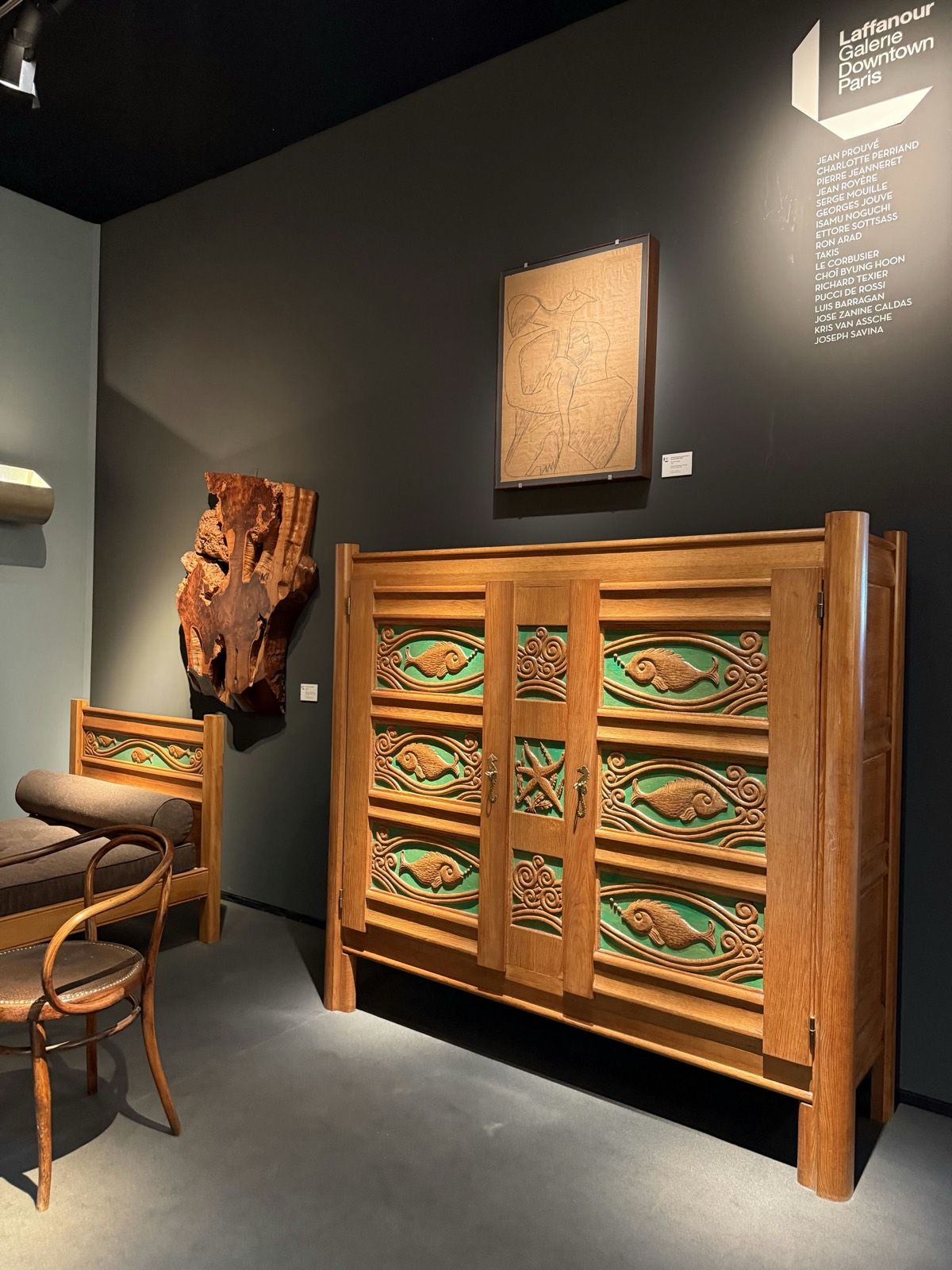
Spend enough time around collectors and you notice an interesting pattern. Very few of them talk about function.
A chair may be comfortable. A lamp may light a room beautifully. Yet those qualities rarely explain why someone travels across a city, waits six months, or spends the price of a small car to acquire a piece.
The conversation tends to drift elsewhere. Towards the maker. The material. The workshop. The exhibition where the work first appeared. The collector who owned it before.
At some point, the object stops being simply furniture and starts becoming something people collect.
That is where collectible design begins.
Collectible design, defined
Collectible design refers to furniture, lighting, ceramics, textiles and functional objects whose value extends beyond use. These are pieces collected for their authorship, craftsmanship, rarity, provenance and cultural significance.
The distinction sounds straightforward. In practice, it is more nuanced.
A beautifully made dining table can be admired for its proportions, materials and practicality. A collectible dining table may possess all of those qualities, yet collectors are looking for something else as well. They want to know who made it, how it was made, how many exist, where it has been shown, and how it fits into a broader conversation about design.
The useful question is not whether an object functions.
The useful question is whether the object still matters once function is removed from the discussion.
If the answer is yes, you are entering the territory of collectible design.
How collectible design differs from decorative furniture
This distinction is often misunderstood.
Decorative furniture can be exceptional. Some of the most beautiful interiors in the world contain pieces chosen entirely for their visual contribution to a room.
Collectible design operates according to a different logic.
Its value is tied to context as much as appearance. The maker matters. The process matters. The materials matter. Provenance matters. Cultural relevance matters.
A useful test is portability of meaning.
Move a decorative piece into a different room and it may lose some of its impact. Move a collectible piece and it carries its significance with it.
The story lives within the object itself.
Walking fairs such as PAD Paris or Collectible Brussels makes this distinction easier to understand. Two chairs may sit a few metres apart. Similar materials. Similar scale. Similar craftsmanship. Yet one attracts curators, collectors and museums while the other remains purely decorative.
The difference rarely reveals itself at first glance.
It sits beneath the surface.
Why provenance matters
In gallery conversations, provenance often appears before price.
That surprises many first-time collectors.
Provenance is simply the documented history of an object. It includes origin, ownership, exhibition history, publication history, gallery representation, maker documentation and edition records.
The market values provenance because it reduces uncertainty.
It tells a collector where a piece came from, how it has moved through the world and whether its story can be verified.
At the highest level of the market, provenance can have a remarkable impact on value.
In April 2026, an ensemble of fifteen Claude Lalanne mirrors, originally commissioned for Yves Saint Laurent and Pierre Bergé, sold at Sotheby’s New York for more than $33 million, setting a new auction record for a work of design.
The mirrors were extraordinary objects.
Their provenance was equally extraordinary.
The market was responding to both.
The same principle applies far below the record-setting tier.
A ceramic vessel with documentation from the maker’s studio carries a different level of confidence than an identical vessel with no supporting history. A documented edition of ten carries a different weight from an object whose production history is unclear.
Collectors are rarely purchasing stories alone. They are purchasing confidence. Provenance helps provide it.
Materials, makers and limited editions
Material and making sit at the centre of collectible design.
Collectors often become surprisingly attentive to process. They learn how bronze is cast, how wood is seasoned, how glazes behave in a kiln, how stone responds to carving, or how a textile is woven.
This knowledge changes the way objects are seen.
A piece that initially appears simple may reveal years of technical mastery.
A piece that appears complicated may reveal very little.
The maker matters for similar reasons.
A recognised maker brings context. Their work can be studied, compared and situated within a broader body of practice. The object becomes part of an ongoing story rather than an isolated thing.
Edition size also influences value.
A unique work carries one set of considerations. A limited edition carries another. Neither is automatically better.
Collectors simply want clarity. The market tends to reward scarcity when scarcity can be verified.
How collectors assess value
One of the biggest misconceptions about collectible design is that value comes from appearance alone.
Imagine two cabinets standing side by side.
The first was manufactured twenty years ago by a furniture company that no longer exists. The second was created by a contemporary design studio in a documented edition of eight, exhibited at a respected gallery and acquired directly from the original owner.
To many people they may appear equally attractive. To a collector they occupy entirely different worlds.
The difference has very little to do with aesthetics and almost everything to do with context.
Collectors are assessing a combination of factors:
- Authorship
- Originality
- Provenance
- Condition
- Rarity
- Material quality
- Technical execution
- Exhibition history
- Market recognition
- Cultural relevance
The mistake is assuming that any single factor determines value.
A recognised maker does not guarantee a strong piece. An unknown maker does not prevent one.
The most experienced collectors learn to evaluate the whole object rather than relying on a single reassurance.
Where collectible design appears
Most people encounter collectible design through fairs, galleries and interiors. Each plays a different role.
Fairs accelerate exposure. They allow collectors to compare dozens of galleries, makers and approaches within a single visit. They also provide a useful snapshot of where attention is moving within the market.
Galleries deepen understanding. Good galleries spend years developing relationships with makers and building knowledge around their work. They can explain provenance, edition structure, production methods and market context in a way few other places can.
Interiors provide the final test. An object that looks compelling on a gallery plinth must still succeed when placed beside architecture, natural light, artworks and everyday life.
This is where many collectors discover that collectible design is about far more than acquisition. It is about living with objects.
How to start looking
New collectors often assume they need to buy something before they can begin collecting.
The opposite is usually true. The strongest collections are often built by people who spend a long time looking.
Visit fairs. Visit galleries. Follow makers whose work continues to hold your attention. Learn the materials. Ask questions. Read exhibition texts. Compare objects across different contexts.
The goal is not speed. The goal is familiarity.
Over time, patterns emerge. You begin recognising the same names across fairs and galleries. You start noticing how certain materials are used differently by different makers. You remember a piece you saw years earlier and understand it differently when you encounter it again.
The eye develops gradually. Much more gradually than most people expect.
Many collectors believe access is the scarce resource. Access helps. So does advice. What ultimately matters is attention.
The collectors who build the most interesting collections are rarely the fastest buyers. They are usually the people who spend years looking, comparing, questioning and refining their judgement.
Collecting is often described as the acquisition of objects. In practice, it is closer to the acquisition of discernment.
The objects arrive afterwards.