Last December, a copper hippopotamus sold for $31.4 million. Nobody in the room was really paying for the hippo.
The piece was François-Xavier Lalanne’s Hippopotame Bar, pièce unique, dated 1976. One flank opens to reveal a revolving bottle rack, glass storage, an ice bucket and a tray. It is charming, absurd, useful and unmistakably Lalanne. None of that, by itself, explains the price.
Sotheby’s had placed the high estimate at $10 million. Seven bidders fought for twenty-six minutes and pushed it to $31.4 million, the highest price ever achieved at auction for a work of design.
What they were buying was not just an object. It was a clean story.
Anne Schlumberger commissioned the bar directly from Lalanne. It was made in hand-wrought copper. It was the first and only example in that material. It stayed in the family until after Schlumberger’s death in April 2025, then came to market with no gaps in the line. Patron, artist, material, ownership, sale. The whole life of the thing was visible.
That is what $31.4 million buys now. Not a hippo. A chain of custody.
I had all this in mind in April, arriving in Paris almost too easily: off the Eurostar, into the car with Nina, then straight to the Tuileries Garden. PAD Paris is one of the few fairs I actively look forward to. This year the city was bright, the trees were coming into leaf, and the tent had that particular PAD mood: serious objects, relaxed shoulders, people pretending not to look too closely at what everyone else is looking at.
It has also started to feel like the stronger of the Paris-London pair. Perhaps that is Brexit. Perhaps Paris simply has more oxygen around it now. Perhaps the tent in the Tuileries gives the whole thing more room to breathe than London can manage. Whatever the reason, PAD Paris currently feels less pinched, less dutiful, and more alive.
That matters, because fairs are not only about what is shown. They are about what the market chooses to notice.
Beauty still matters, of course. So does the name. Nobody is paying record prices for ugly objects with impeccable paperwork, and no serious collector has stopped caring whether the designer is Le Corbusier, Lalanne, Bugatti or Gambone. A beautiful object by a major name still gets you into the room.
But it no longer closes the argument.
The hierarchy is more precise than that. Authorship tells you who made or designed the object. Craft shows you how it was made, and whether the hand, material and place are still visible in it. Provenance tells you where it has been: who commissioned it, who owned it, how it moved through the world, and whether that story can be proved.
The strongest pieces now carry all three. A name to anchor them. A hand to humanise them. A history to make them scarce.
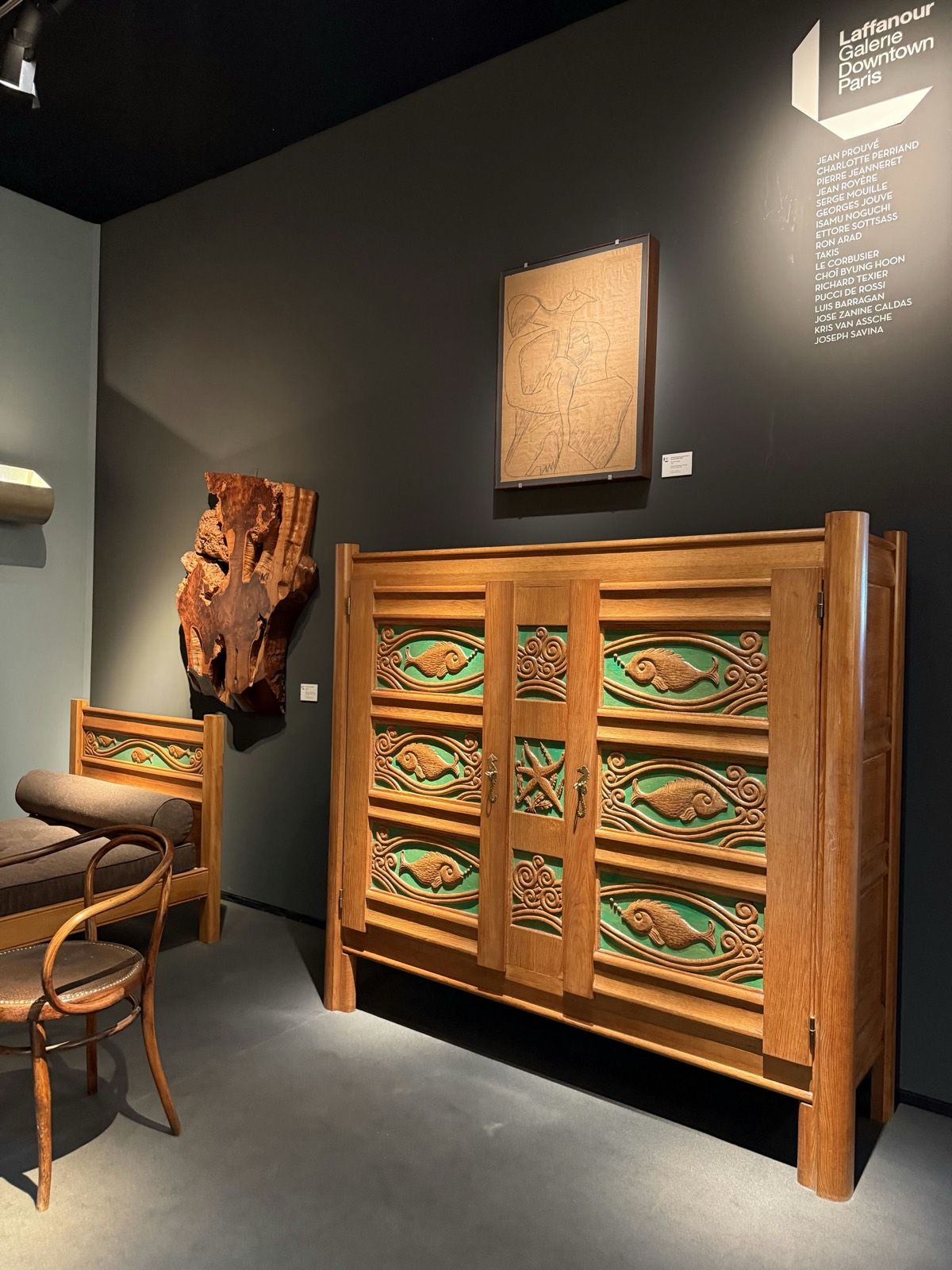
That is why the cabinet on the Laffanour / Galerie Downtown stand mattered.
The cabinet that won the fair
PAD runs each spring beneath the trees of the Tuileries. This year brought 77 galleries and the usual claim that the fair is a market barometer. For once, the reading was clear. The Historic Design Prize went to Laffanour / Galerie Downtown for an armoire most people now call the Fish Cabinet.
It was conceived in 1961 by Le Corbusier and carved by Joseph Savina, the Breton sculptor and cabinetmaker who made Le Corbusier’s wooden sculptures while running his own workshop in Tréguier.
You can see why it won. The doors and drawer fronts are oak, carved in low relief with fish moving across deep green-painted panels. Each fish is slightly different. The chisel marks remain. The best detail is the lock: a brass seahorse escutcheon, with the key turning in its belly. It is the kind of decision a production line would delete and a spreadsheet would never allow.
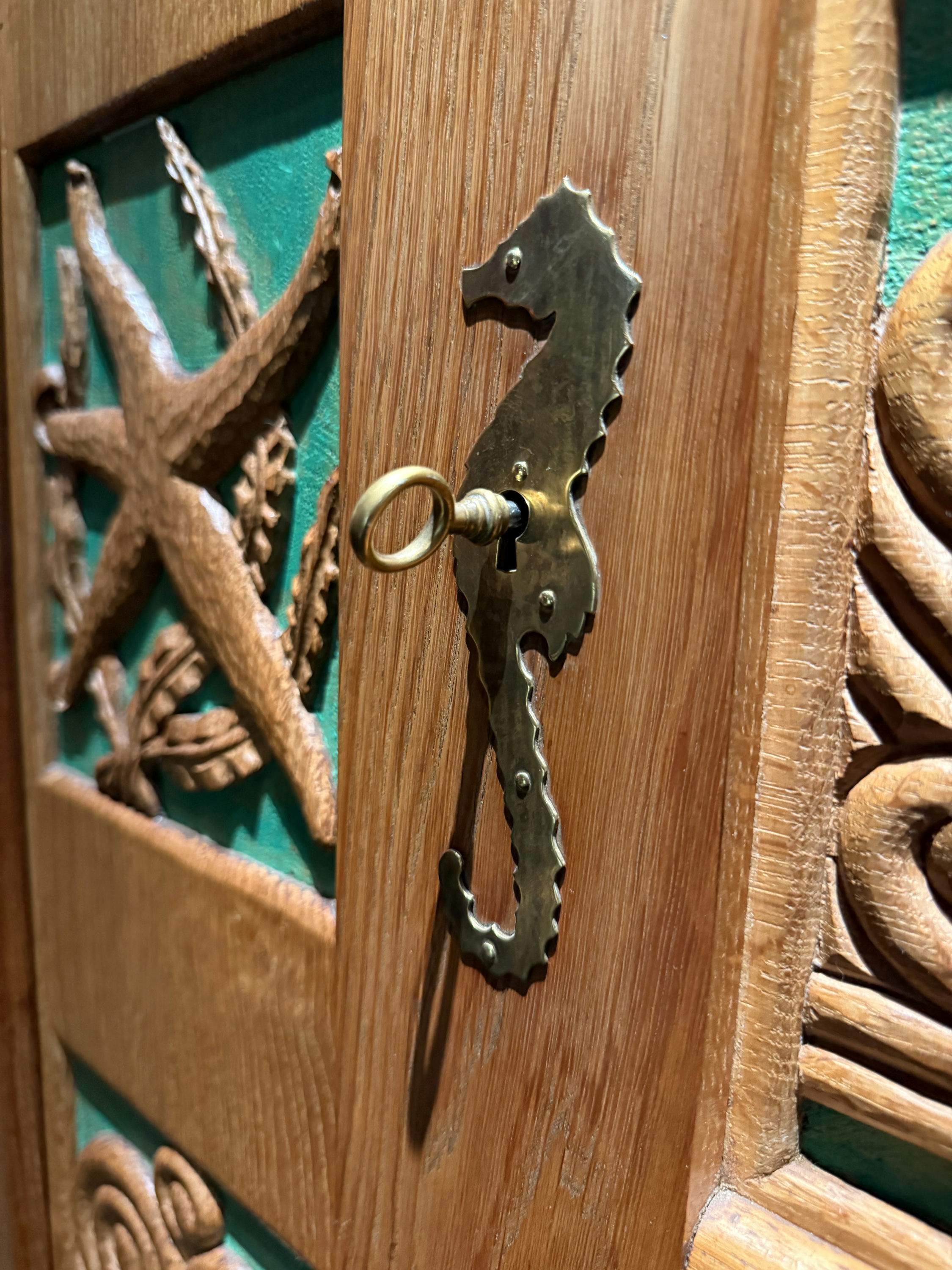
Look at what the jury rewarded. A named designer. A named maker. A date. A workshop you can place on a map. And carving so plainly done by hand that the making becomes part of the object’s authority.
That is not prettiness. It is evidence.
The same logic, in every material
The same logic ran through the fair in objects that otherwise had little in common.
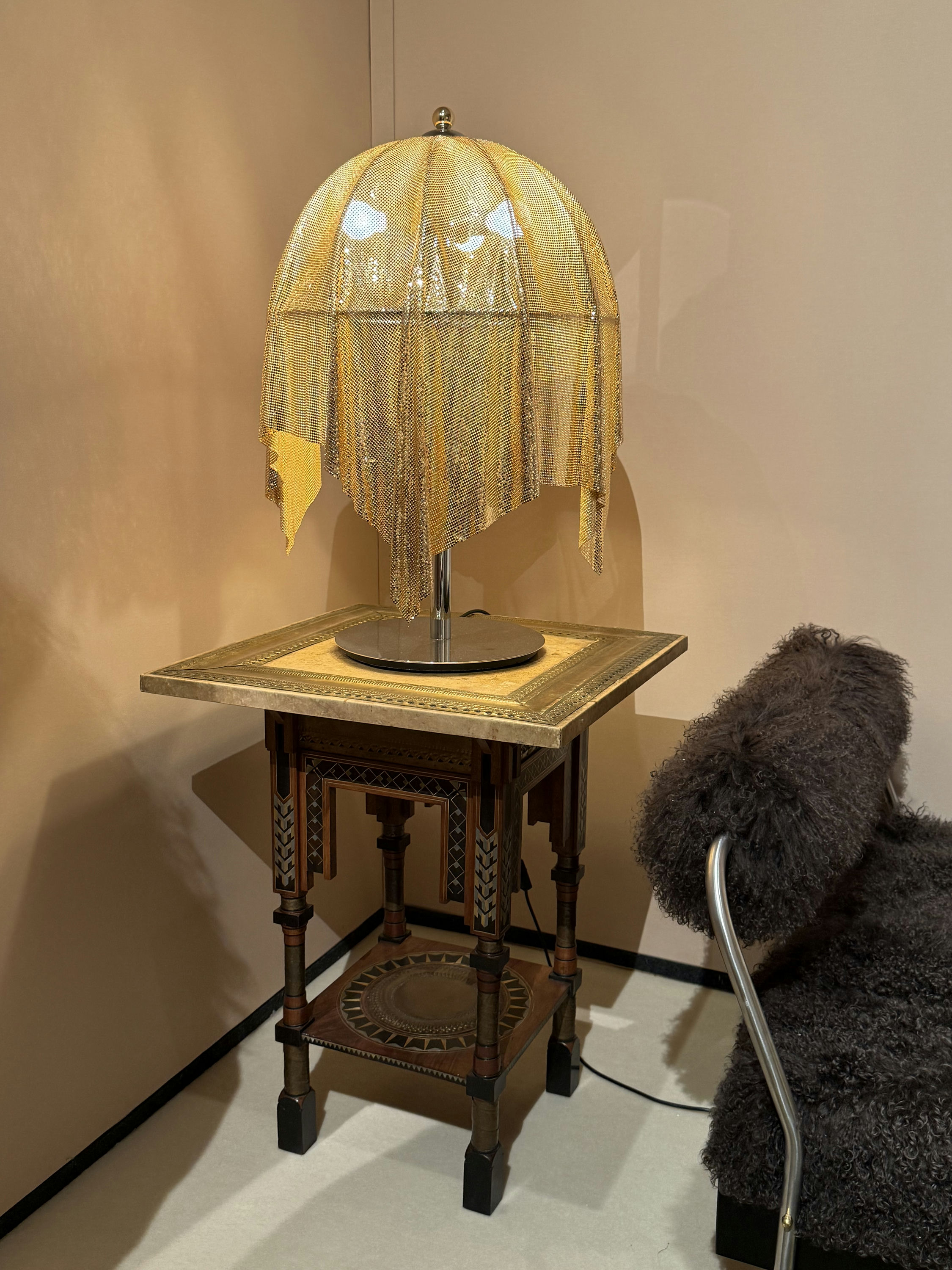
At Yves Salomon Éditions, new work was staged against furniture by Carlo Bugatti, the Milanese eccentric whose inlaid, Moorish-influenced pieces date from the turn of the last century. A contemporary fringed-mesh lampshade sat on a Bugatti table inlaid with pewter and bone. The pairing worked because the old piece carried a century of history the new one could lean against.
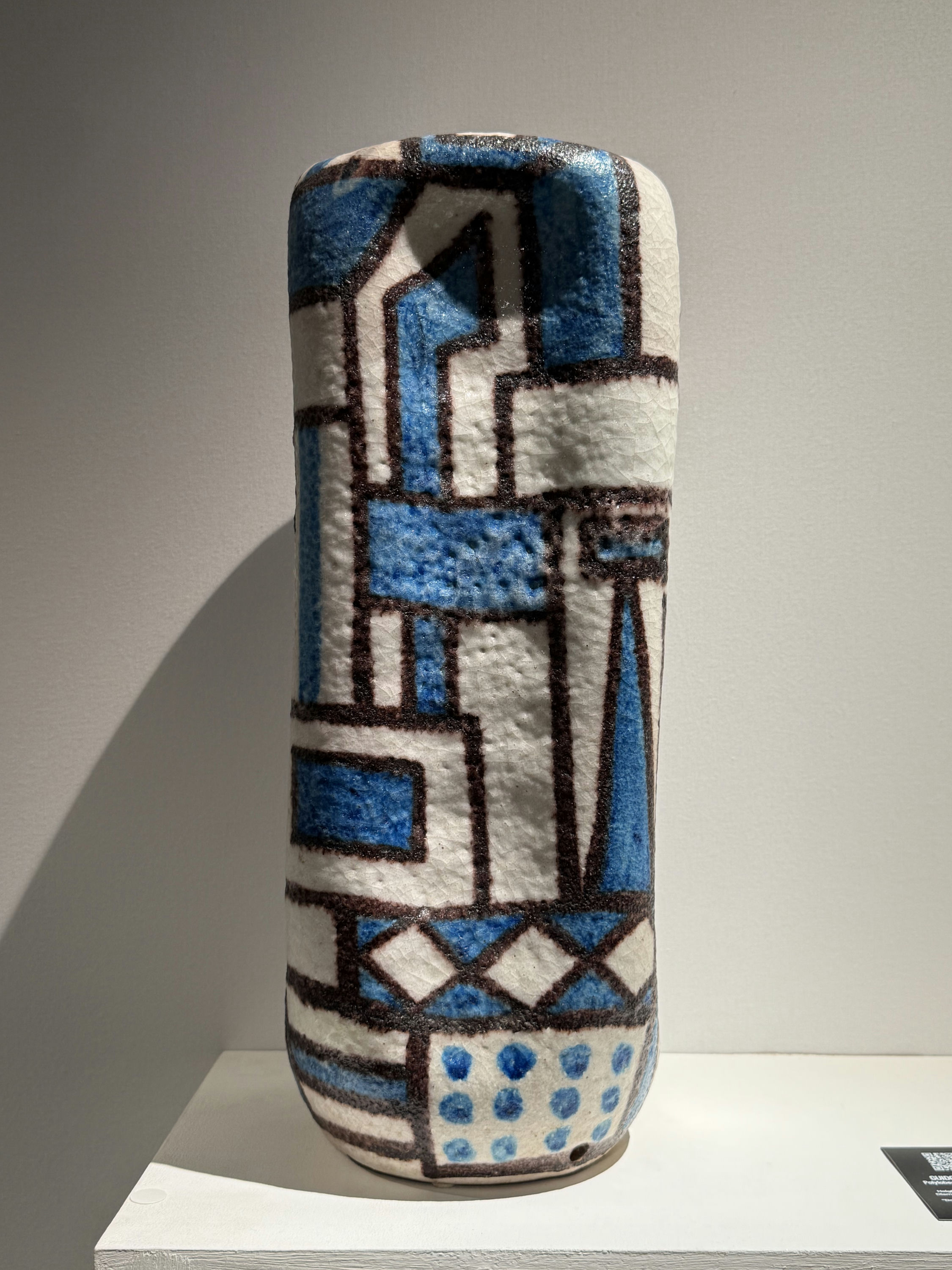
At Gaïa & Romeo, the material changed but the principle held. A tall Guido Gambone vessel, enamelled in blue and black geometry on a chalky white ground, was dated circa 1955–65 and signed Gambone Italy on the base. The signature is not romance. It is evidence of authorship, and authorship is where provenance begins.
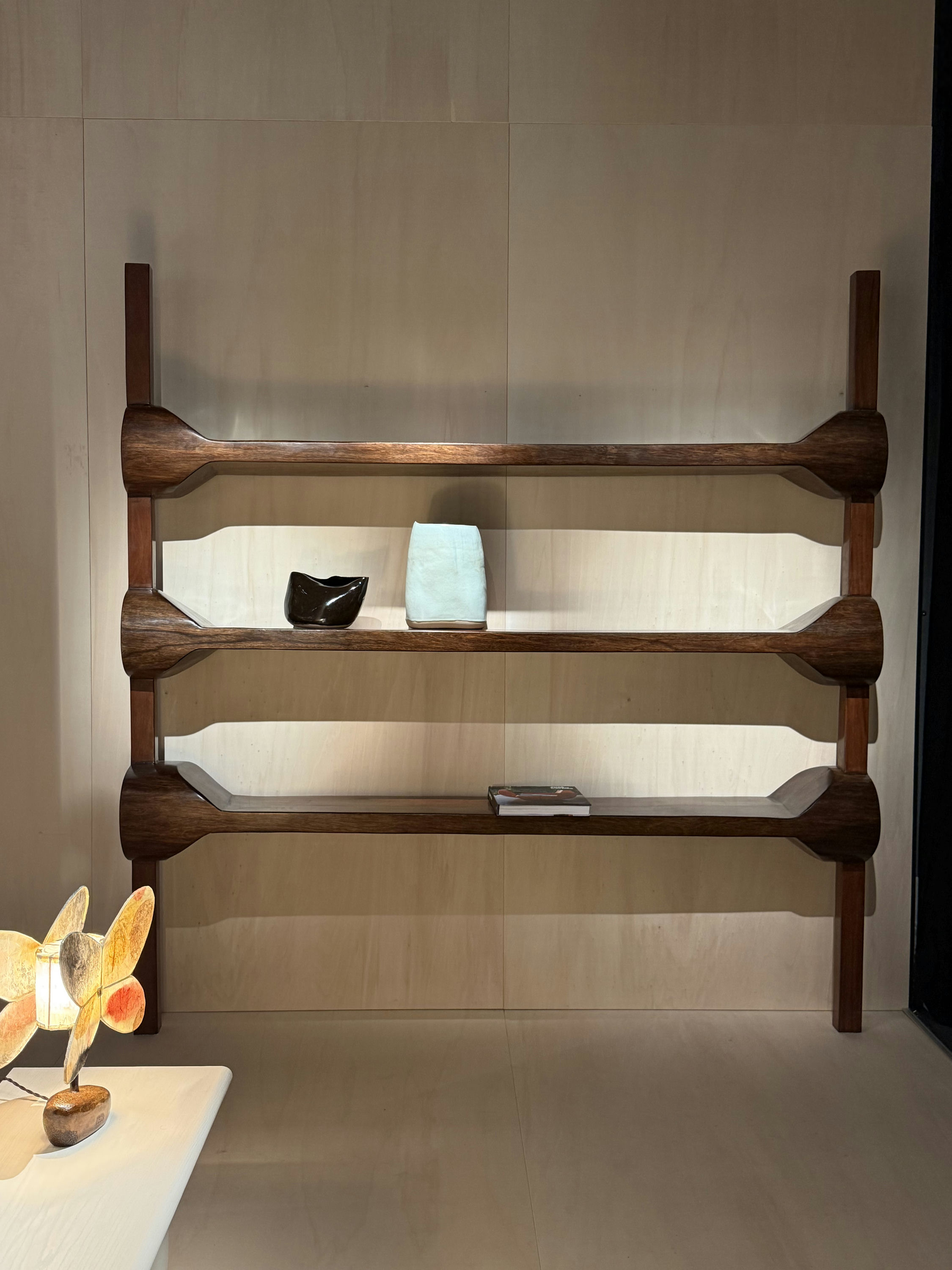
At Brazil Modernist, José Zanine Caldas appeared in tropical hardwood, the grain doing the decorative work. Caldas began by making furniture from offcuts and became one of Brazilian modernism’s most collectible names. In his best pieces, the material is not neutral. The wood tells you something about the place, the method and the maker.
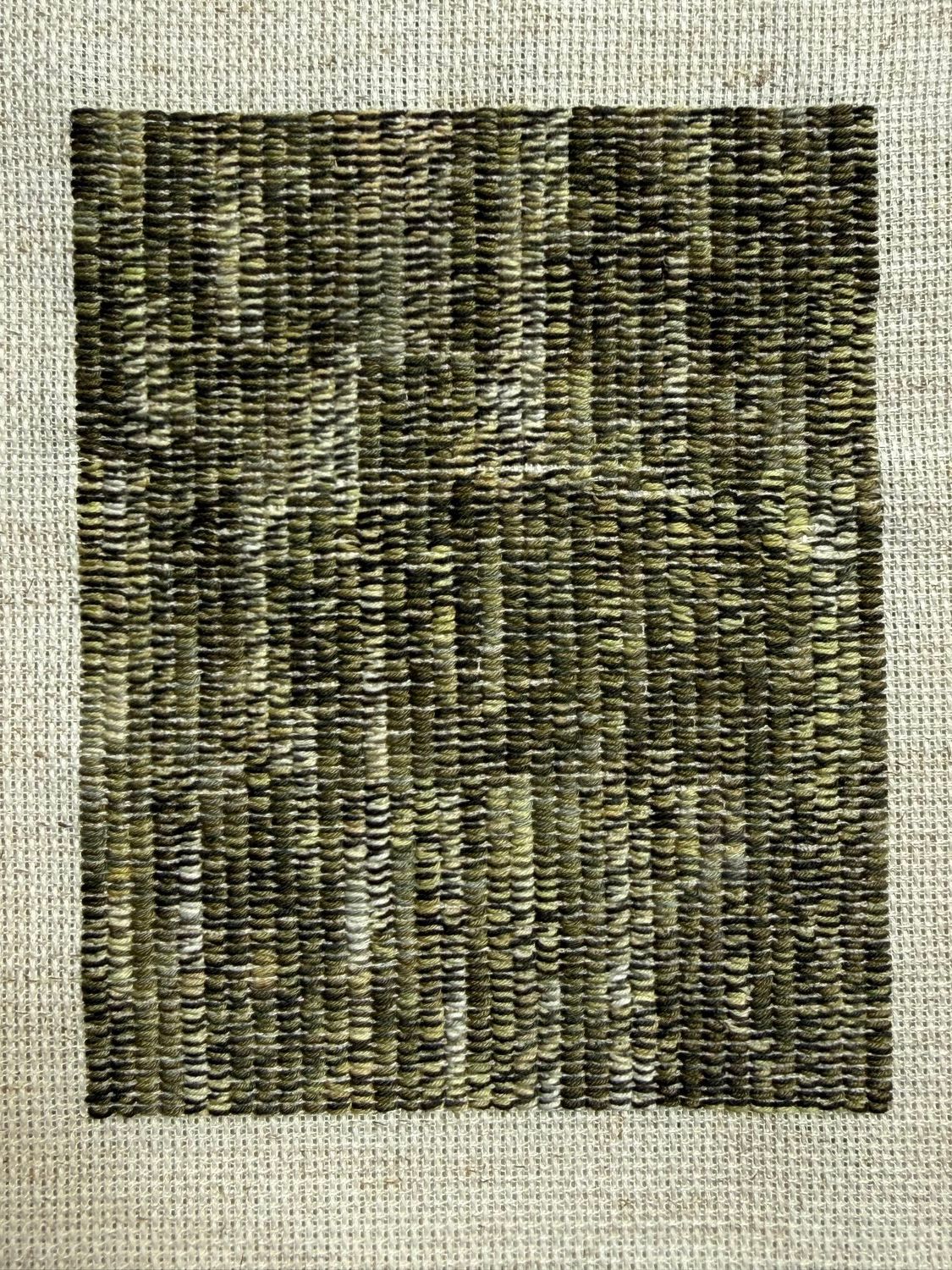
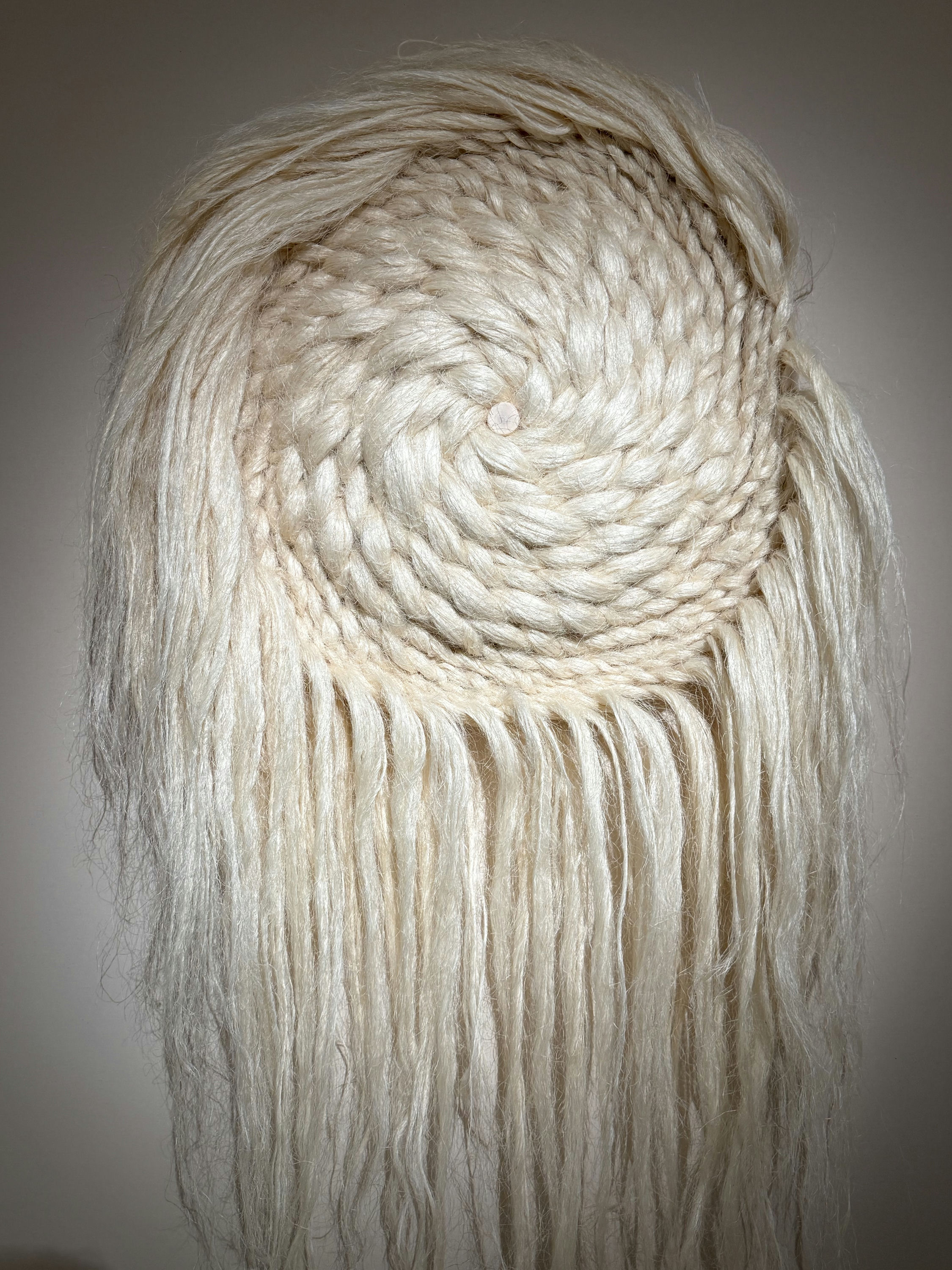
At Maria Wettergren, Cécilie Bendixen’s pale fibre work made the argument without any old ownership trail attached. The piece coils tightly at the centre, then falls into long loose strands. No famous patron. No auction history. Just the hand, visible in every twist of thread. That is how provenance starts before the market has named it.
Five objects, five materials, one idea. The fair and the saleroom were telling the same story from opposite ends of the market. At the top, a $31.4 million Lalanne with a patron’s name attached. On the fair floor, prize pieces and stand highlights whose power came from named makers, visible process and traceable origin.
Provenance at one end. Craft at the other. The object that can account for itself is the object most likely to hold value.
Why now
A market flooded with newness eventually starts to prize what cannot be manufactured on demand.
You can commission a beautiful object next week. You cannot commission a past.
For years, the collectible design market sold names: the designer, the brand, the recognisable silhouette. That still matters, but it is no longer the whole game. Collectors have become more fluent. They have also become harder to impress. They can see everything, buy almost anything and compare faster than any previous generation of buyers.
So the premium shifts to what cannot be copied: documented origin, scarce material, visible authorship, a clean ownership trail.
Sotheby’s has said younger bidders are now a serious force in the luxury market, with nearly a third of bidders in one recent luxury sales cycle under forty. That does not mean young collectors have suddenly become sentimental antiquarians. It means scarcity has changed shape. Logo is easy. Access is easy. A convincing object history is not.
Craft matters because most objects will never have an Anne Schlumberger attached. Most will not arrive with a famous patron, a single-family provenance and a world-record auction room behind them.
What they can have is visible making.
The carved fish on the Savina cabinet. The hand in Bendixen’s thread. The grain in Zanine Caldas’s timber. These are not decorative flourishes. They are forms of evidence. They tell a buyer that the object was made by someone, somewhere, through a process that cannot be flattened into a product image.
Craft is provenance before the paperwork catches up.
How to read it
So when you stand in front of a piece and try to judge whether it will hold, stop looking at the finish first. The finish is the easiest thing to admire and the easiest thing to fake.
Read the story.
Who made it? Can you prove it? Is it unique, one of a small number, or one of many? Who owned it before? Is the line back to the maker clear, or does it go vague when the price needs it to be precise? Is the making visible? Are the hand and the place part of what you are looking at, or have they been polished out?
A piece that can answer those questions has a future. A piece that cannot may still be good-looking, but it is decoration until proven otherwise.
The old question was: who designed this?
The better question now is: who made it, where, for whom, and how do we know?
The seahorse on that lock already has the answer.