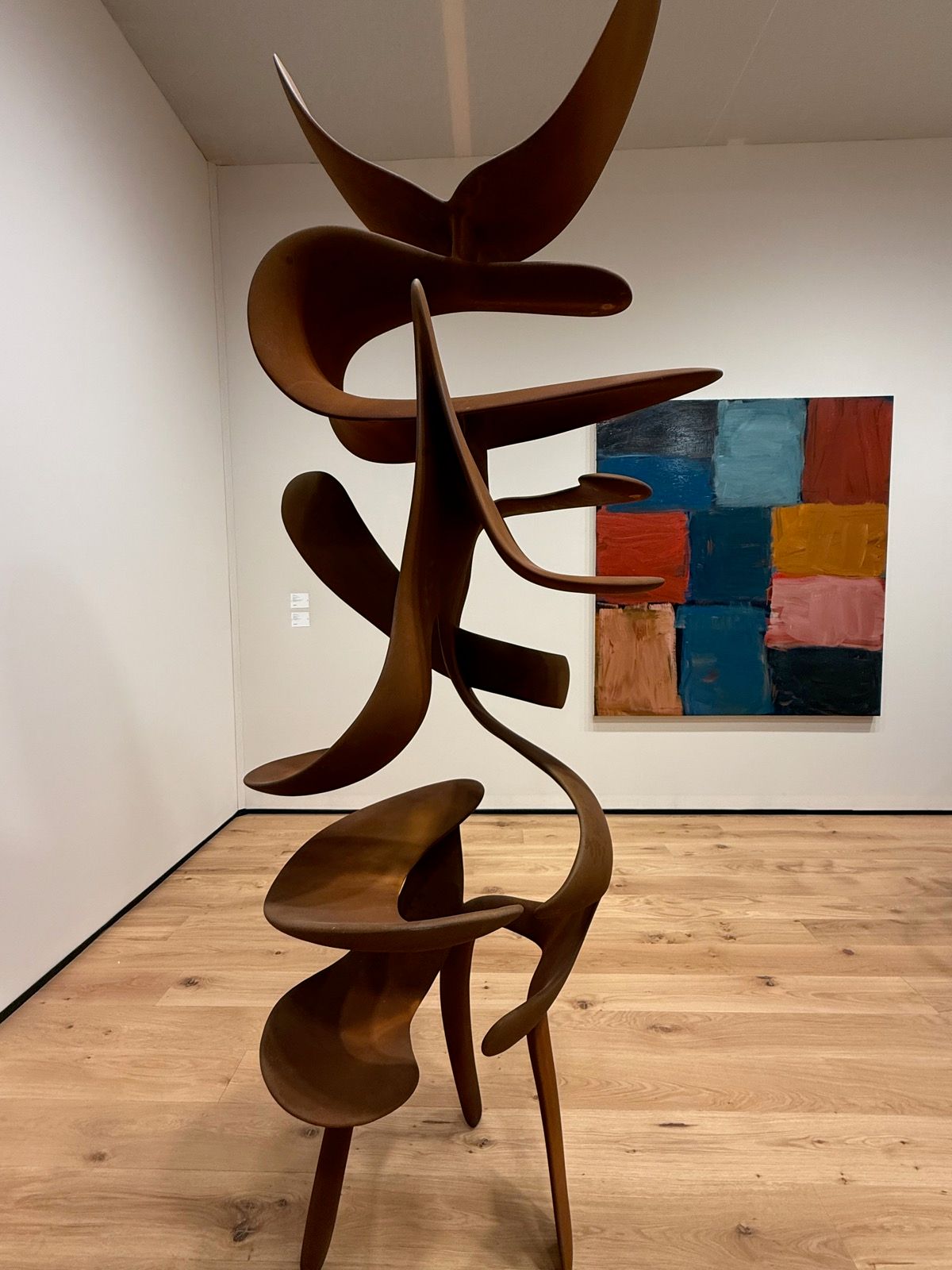
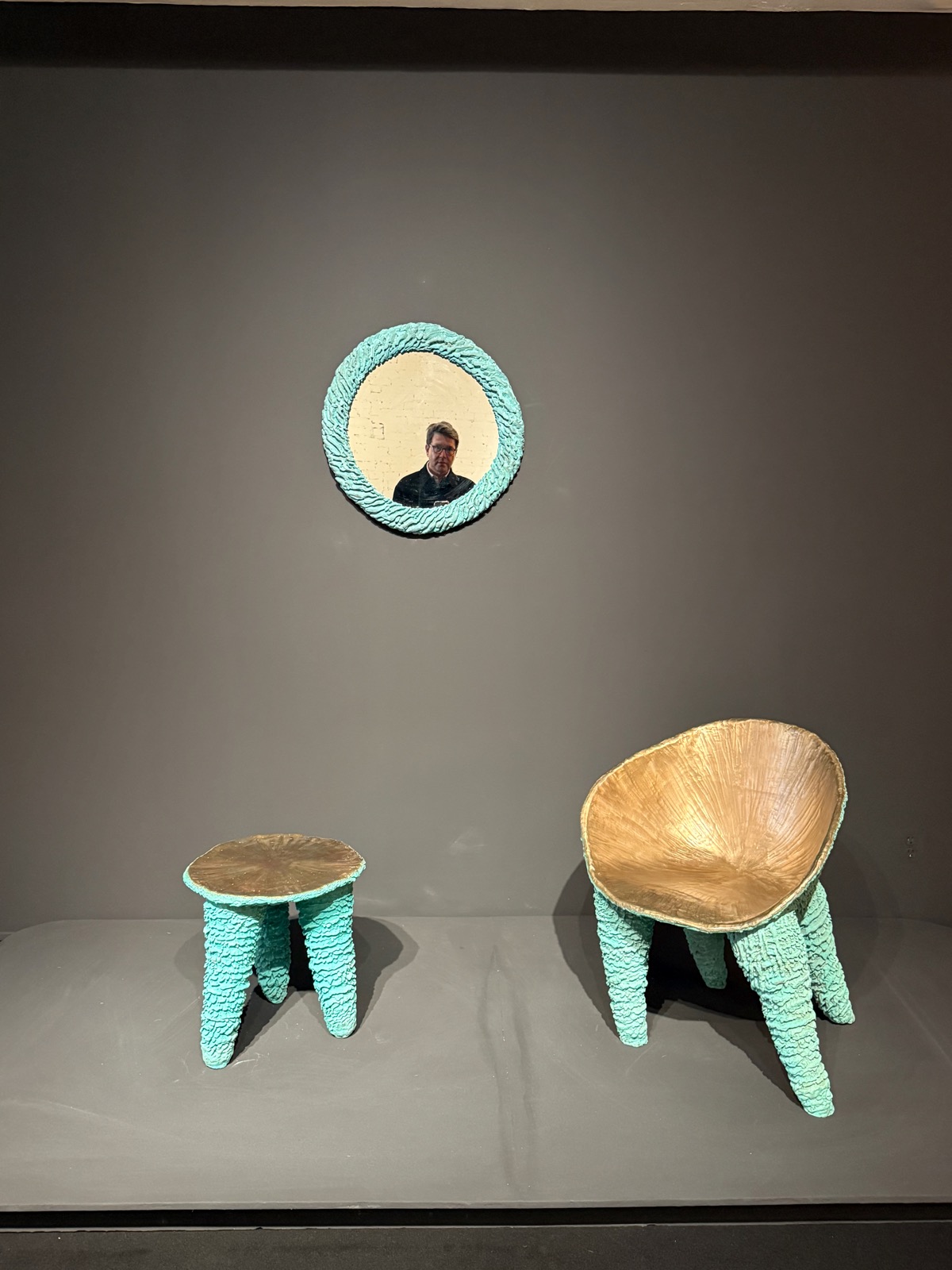
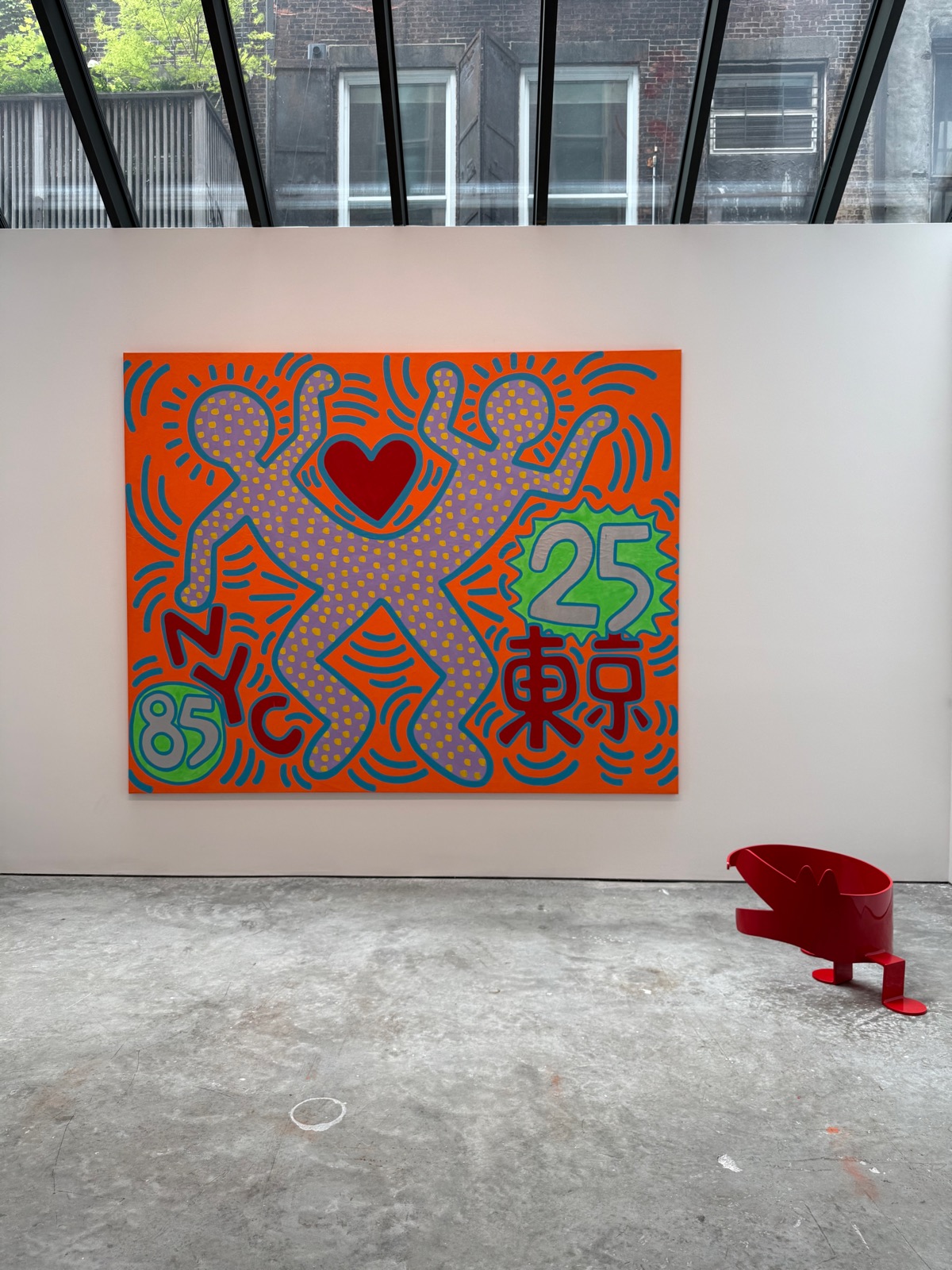
The Haas Brothers have made a chair called Keith Chairing. It’s at R & Company on White Street: cast bronze, the legs a rough turquoise, the bowl of the seat polished to a gold sheen. Two doors down at 60 White, there’s a Keith Haring show. That’s the thing about Tribeca now. The galleries are close enough so that the works can talk to each other.
Cork Street did this once, in London, for art. Four or five shows on one short street, and you came out knowing where the art world’s head was that month. Tribeca does the same, but for two fields at once. Contemporary art and collectible design sit on the same blocks, sometimes the same building. You can read both, and the conversation between them, in an afternoon. No fair gives you that. A fair sorts everything into aisles. Tribeca leaves it mixed, the way a good room is mixed.
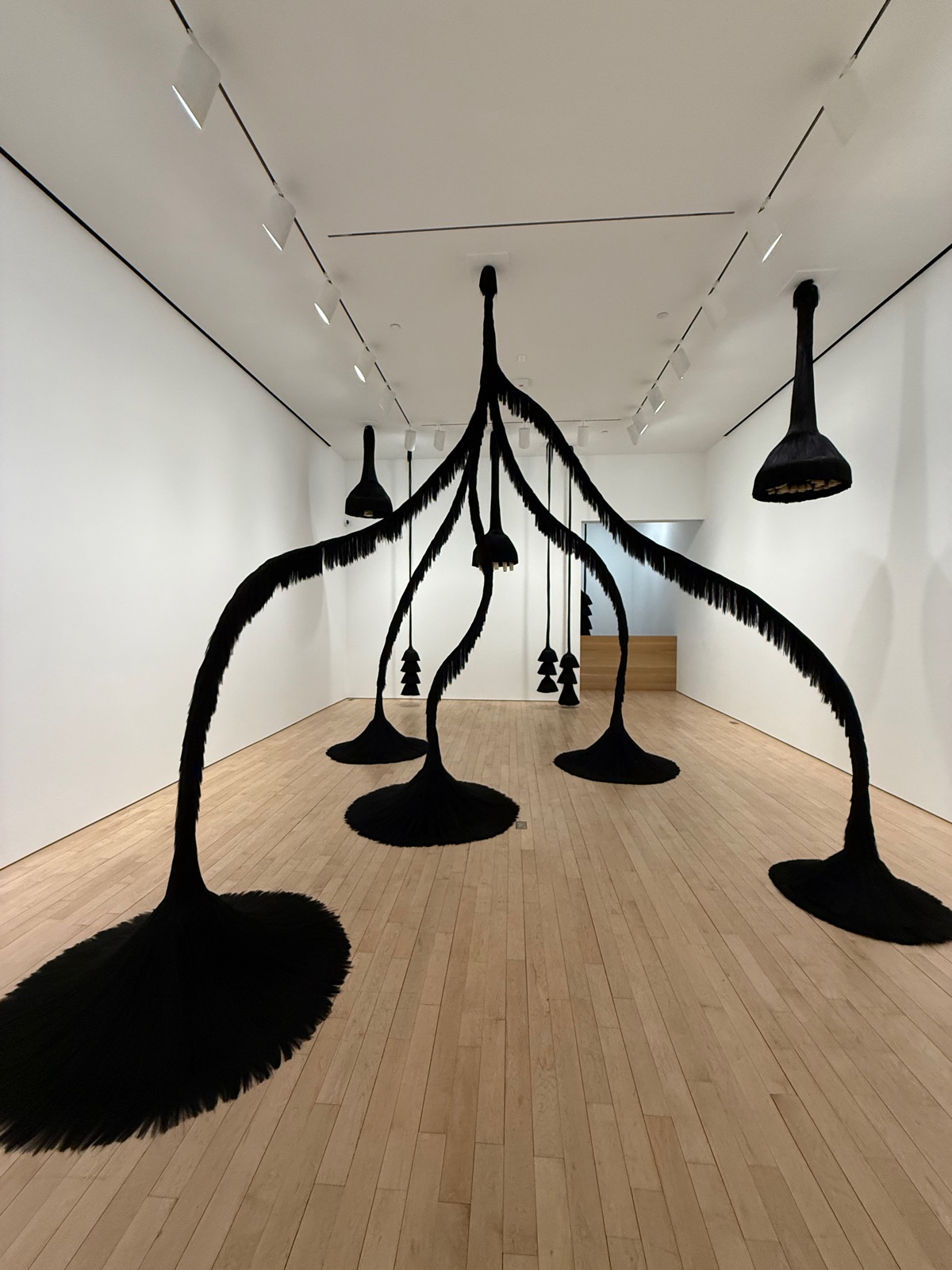
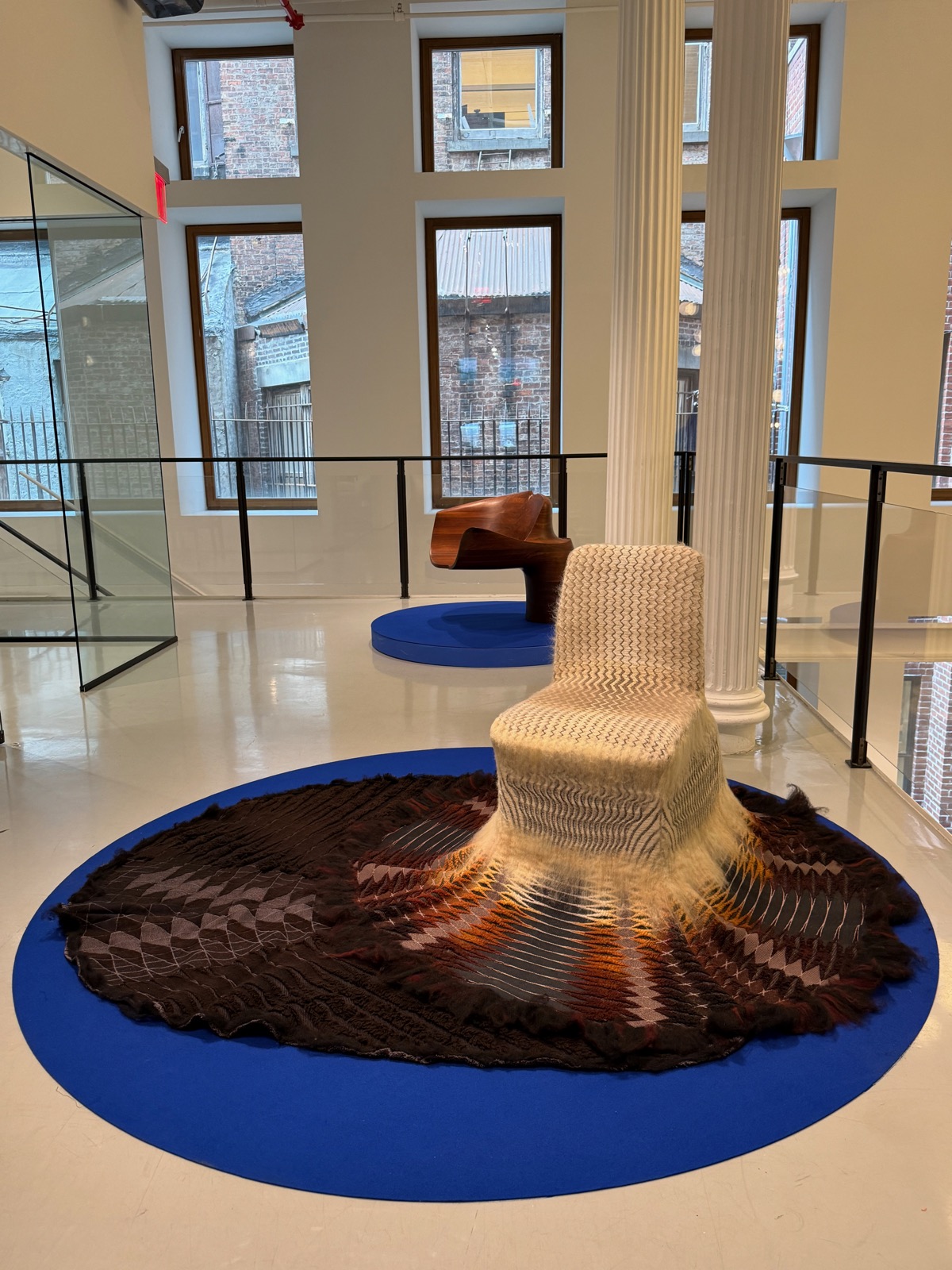
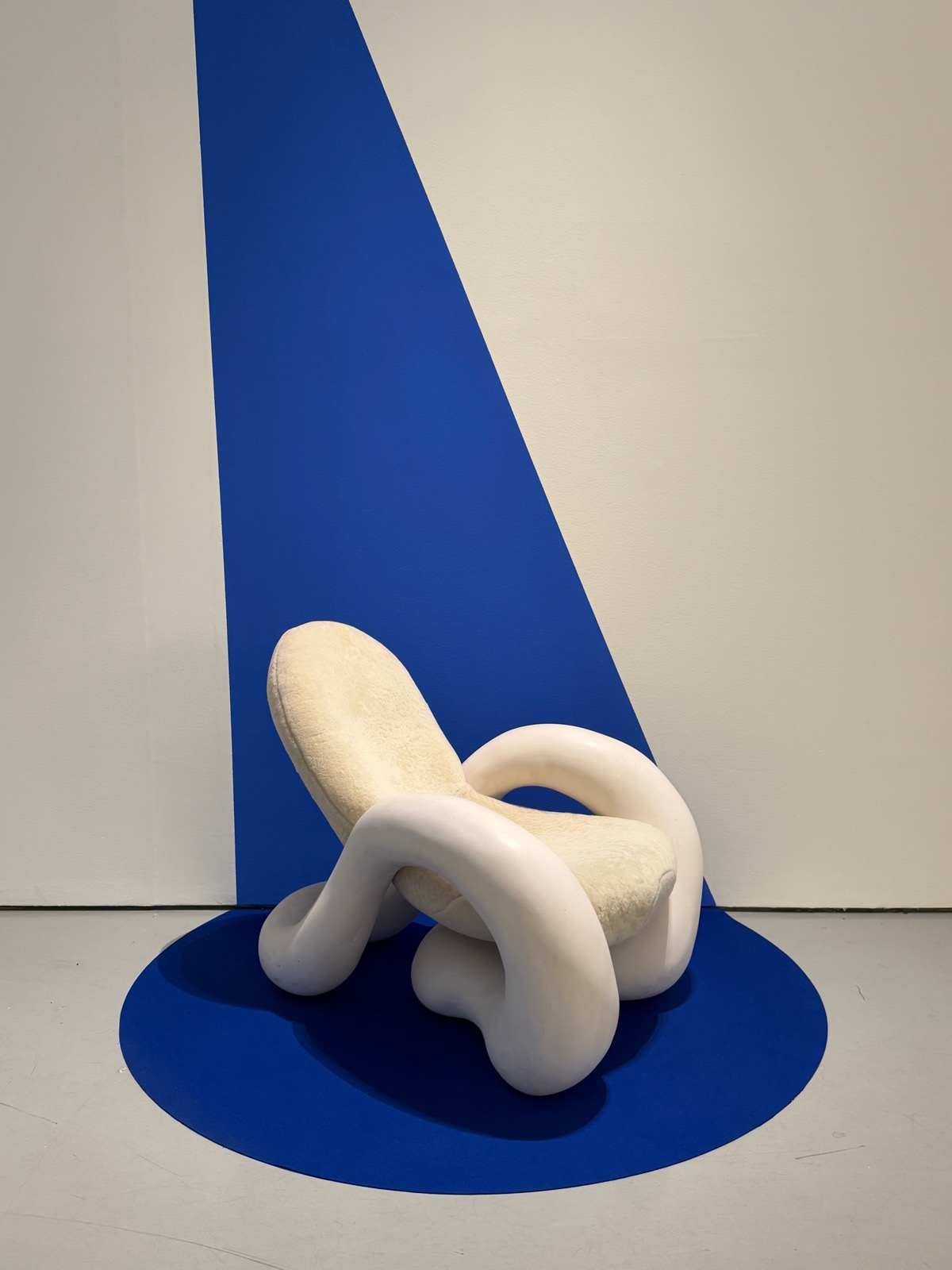
Start on White Street. Three doors, three different worlds. At 58, Jane Lombard has handed the whole gallery to Merryn Omotayo Alaka and Sam Frésquez, who’ve grown a glasshouse out of Kanekalon braiding hair, the cheap synthetic stuff you buy by the packet. Hanging forms, floor forms, something between an orchid and a chandelier. Two doors up at 60, Lio Malca’s Haring runs over several floors, built around the five-panel mural Haring painted for Club DV8, a San Francisco nightclub, in 1986. At 64, R & Company has given two floors to chairs. Not chairs to sit on. Chairs on cobalt-blue plinths, lit like sculpture, which is the point.
That R & Company show, The Chair, Collected, is where the line between the two fields stops meaning much. A 1971 chair you wear like a harness. A 2025 chair being eaten alive by wool. A black lattice chair that looks like glazed porcelain and turns out to be paper pulp and resin. These are pieces of design, sold as design, but they ask to be looked at the way you’d look at a Brancusi. Keith Chairing is in here too, still grinning.
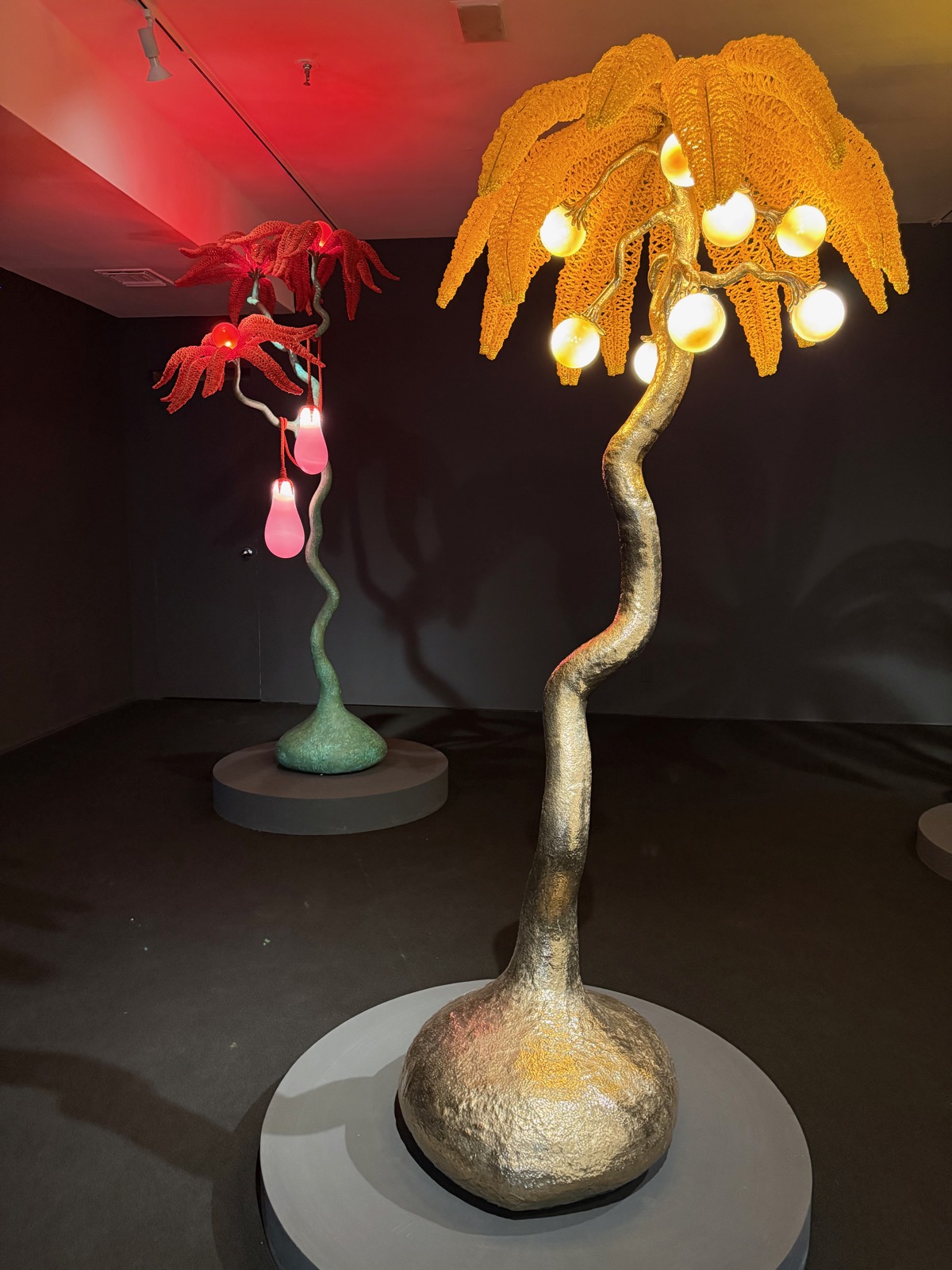
Walk two minutes to R & Company’s other space at 82 Franklin and the Haas Brothers push it further: bronze trees crusted with Venetian glass beads up to a hundred years old, the room dark, all the light coming from inside the work.
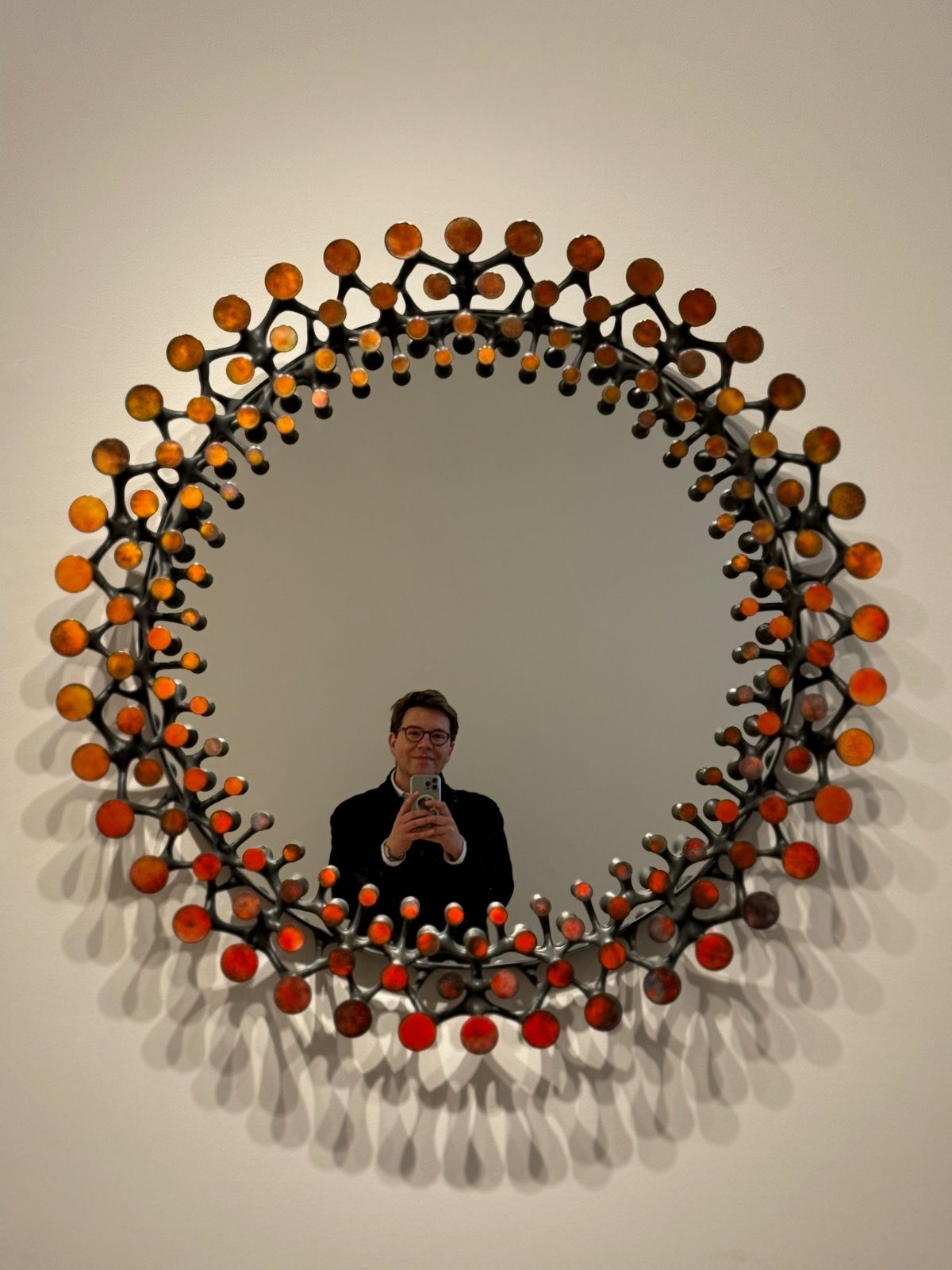
The best thing on the walk is around the corner at 76 Franklin. Twenty First shows European decorative arts, mostly French and Belgian, and the level of making is a step above almost everything else that day. J McDonald’s Dichasium Mirror stops you. A bronze frame that branches like a natural-history diagram, burnt-enamel discs catching the light. You stand in front of it the way you stand in front of a painting. If you’ve time for one stop, make it this one.
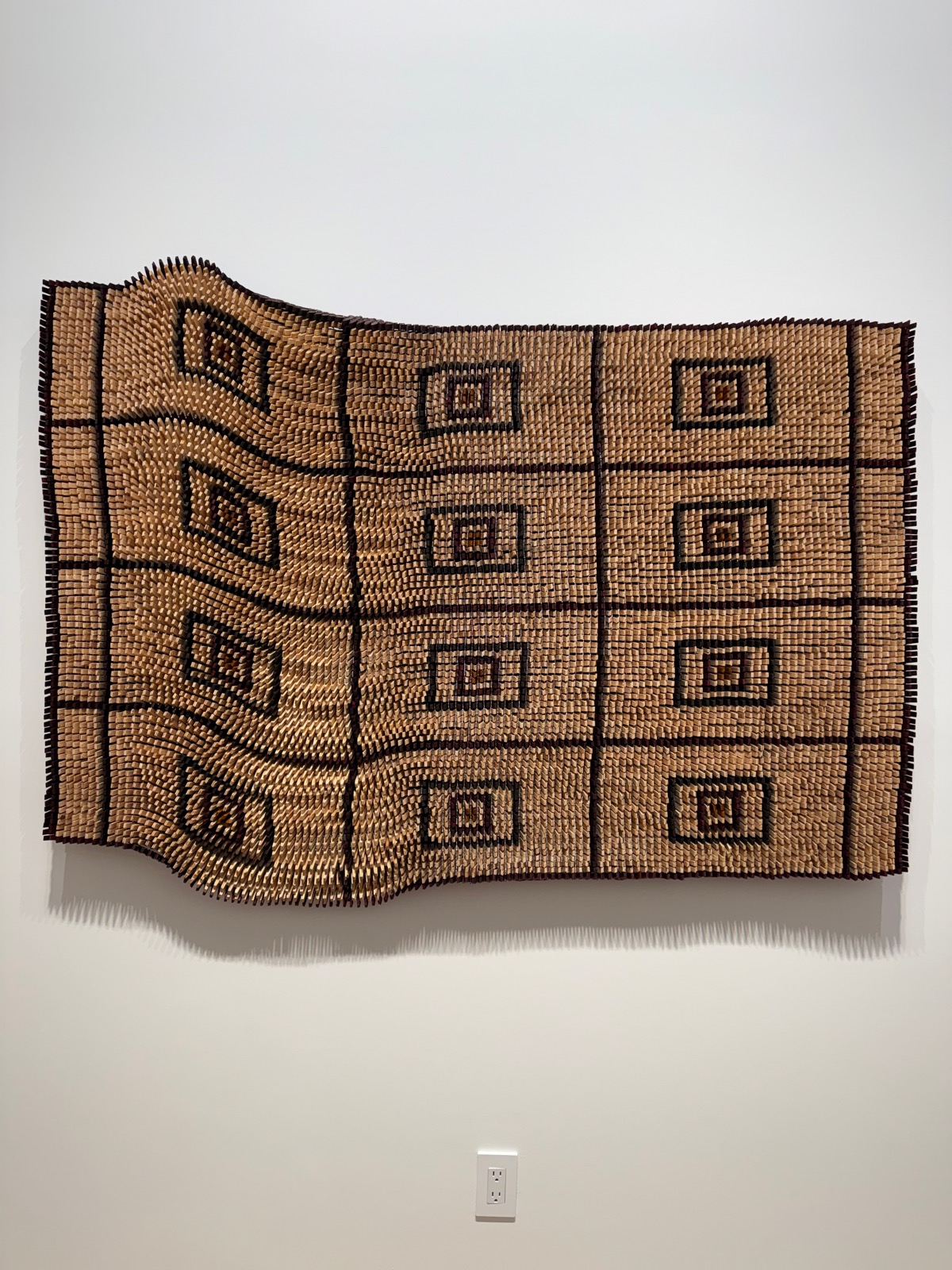
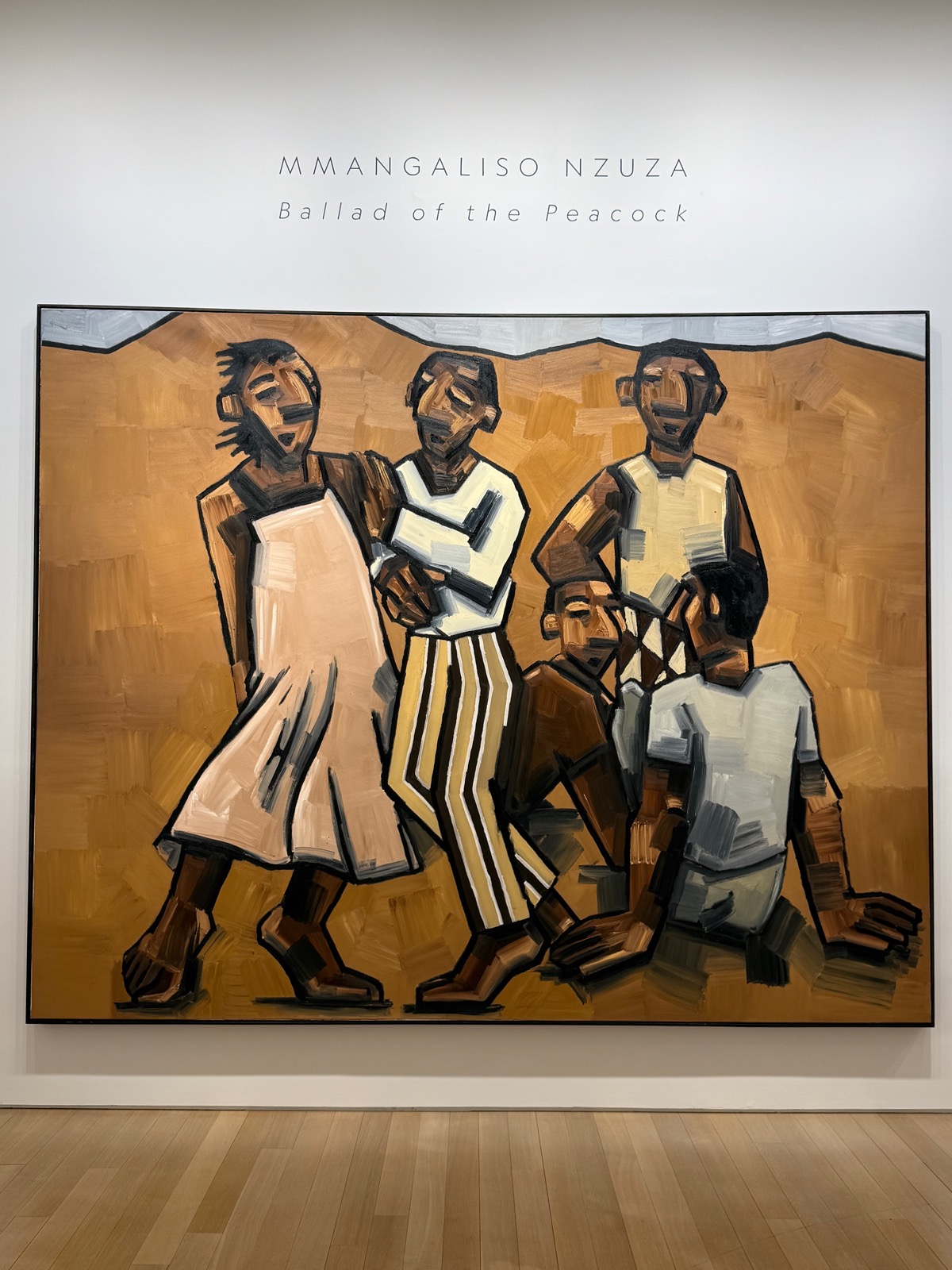
Then Leonard Street. Southern Guild opened here in April, their first permanent New York home, after shutting their Los Angeles gallery. They’ve taken an 1886 cast-iron building with pressed-tin ceilings 17 feet up, and the scale earns its keep. Mmangaliso Nzuza’s paintings run more than 3.5 metres across and the rooms hold them without strain. In another part of the gallery, Usha Seejarim has built wall pieces out of wooden clothes pegs. From across the room they read as woven rugs. Up close they’re thousands of identical pegs in rigid rank. That mistake, textile and then not, is the whole work. It’s art made from the most domestic object there is, a few doors from design made to be looked at like art. The two fields keep swapping clothes.
None of this was here a few years ago. Southern Guild crossed a continent to be on Leonard Street. Marian Goodman Gallery, one of the most serious in the business, opened its New York flagship on Broadway in Tribeca in 2024. R & Company holds two spaces a few blocks apart. Round on Walker Street there’s more, James Cohan and Bienvenu Steinberg, more than one afternoon can take. That’s the proof it’s a real district and not a lucky week. The galleries voted with their leases.
So next time you’ve a free afternoon in New York, don’t plan it to death. Start on White Street and walk. Read the art and the design as one thing, because that’s how they’re hung now, three doors apart, making jokes about each other. Cork Street would know the feeling. It just never had the furniture.