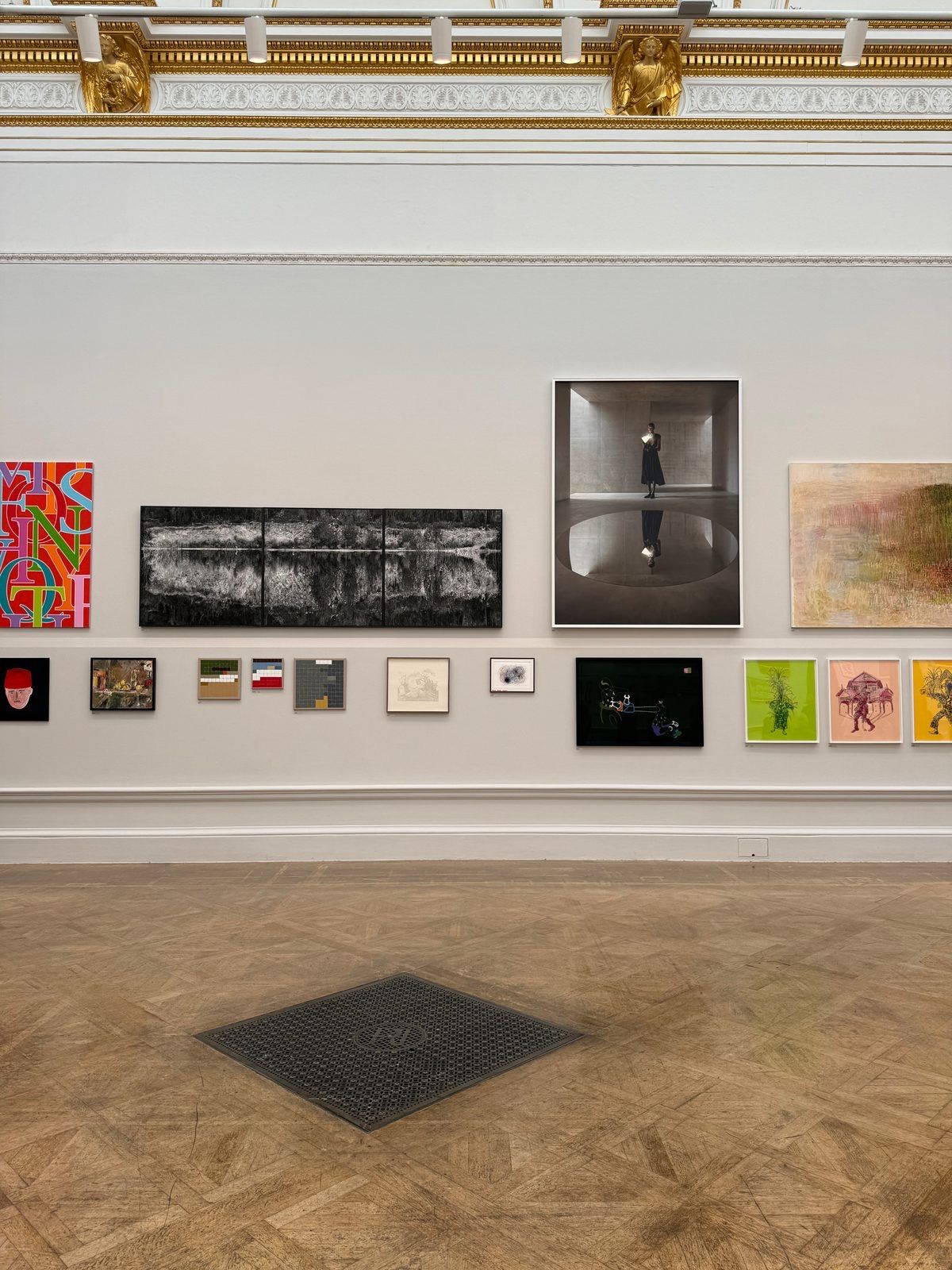
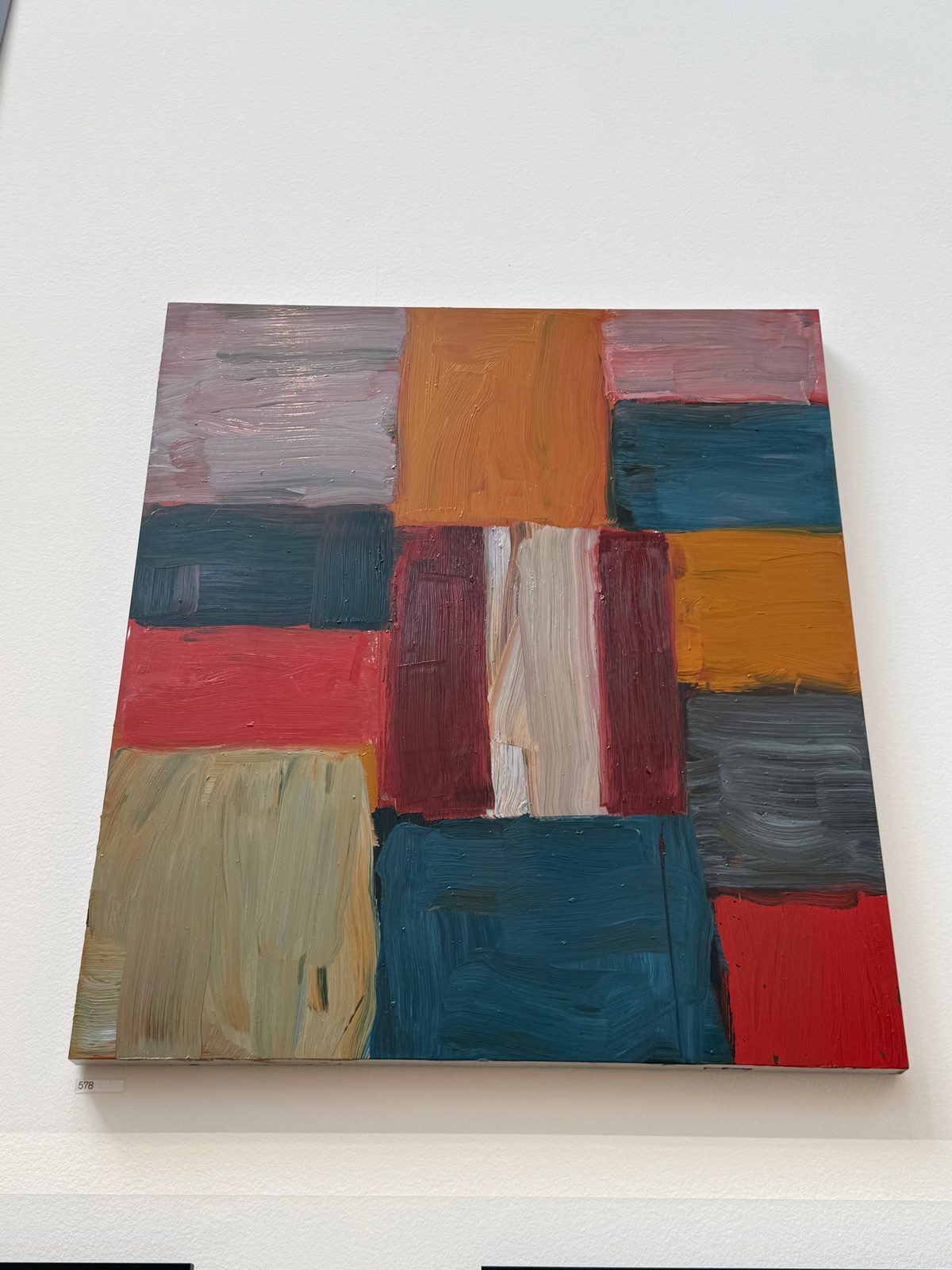
It’s June, and I’m in Gallery V at the Royal Academy. The small square painting in front of me, blues and greys, carries no name. Just a number, 914, and a red dot.
A few works along, number 835 is a green rectangle stitched in thread on raw canvas. I look them up in the list of works. The painting is a Sean Scully, oil on copper, £373,000. The thread drawing is by Frances Burden, £350.
Same room. Same labels.
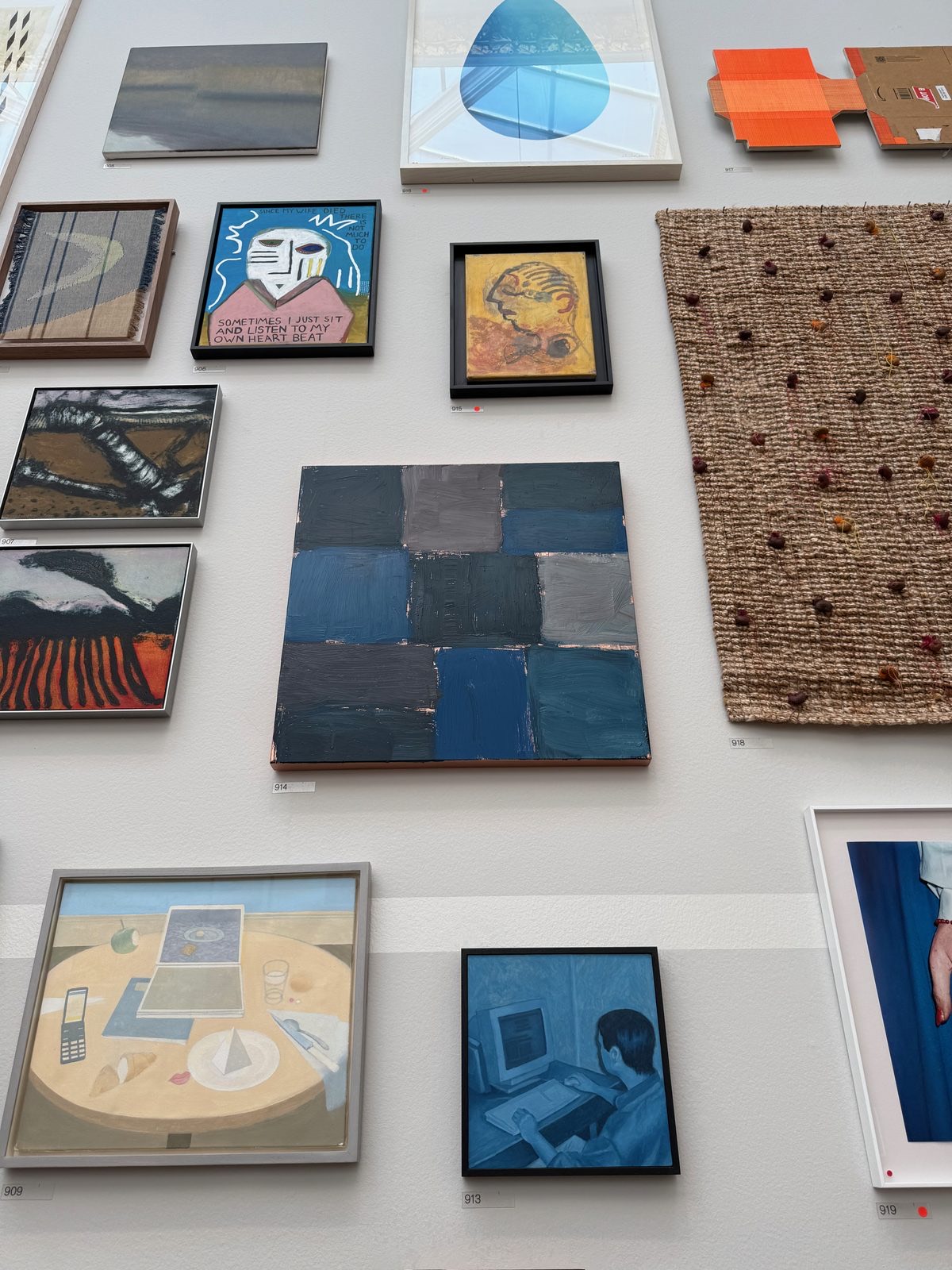
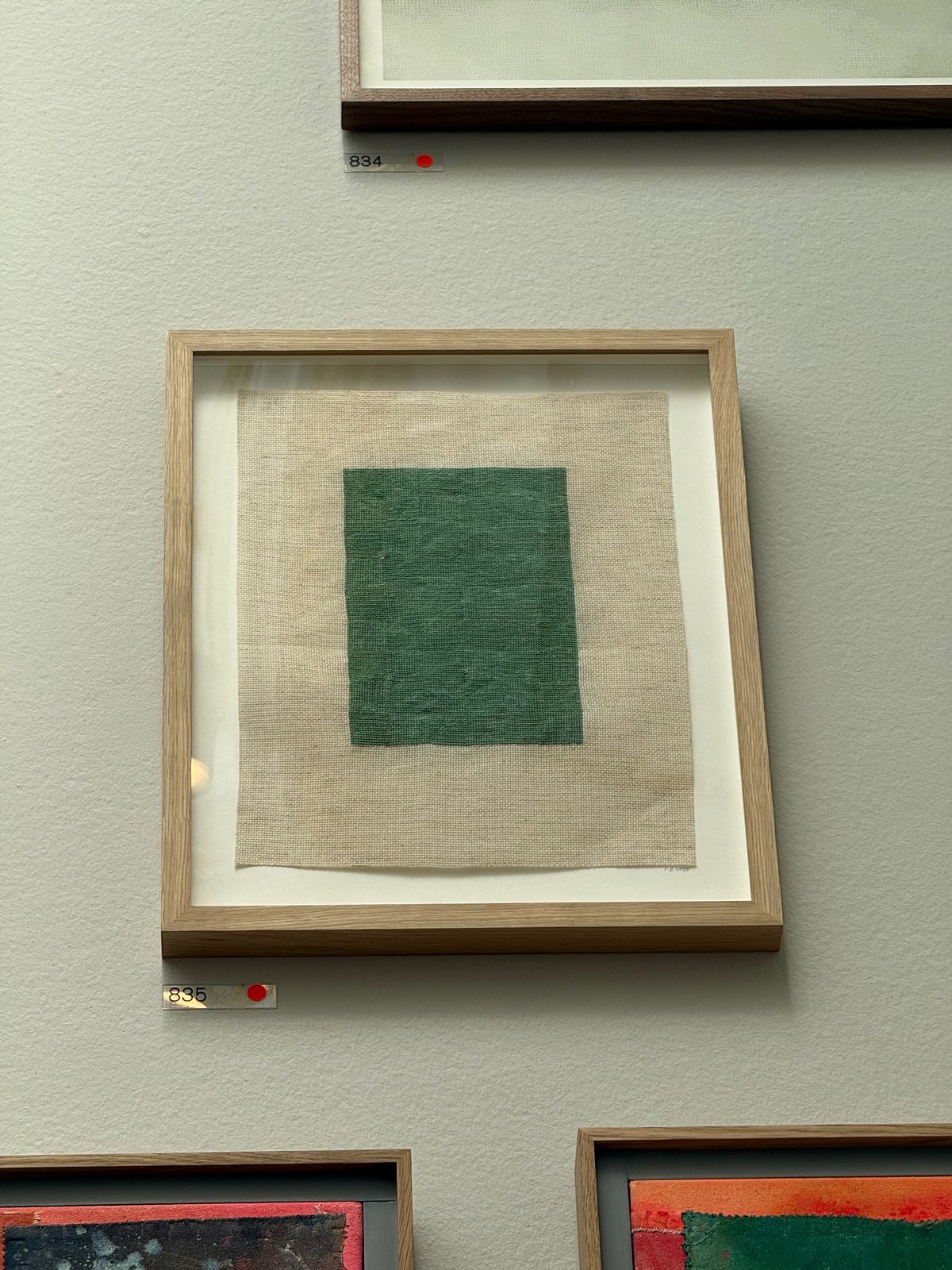
Every review this year seems to ask the same question: can you find the gems in the mishmash? It’s the wrong question. The mishmash is the show.
At the Royal Academy nothing on the wall carries a name. Each work hangs under a number, and the names and prices sit in the printed list you carry round. There are 1,851 works this year, by 1,241 artists, chosen from some 18,000 entries. Anyone over 18 can enter, for £40 a work, with no gallery and no dealer in the way. A first-timer’s print hangs a few numbers from a William Kentridge, and the label gives nothing away.
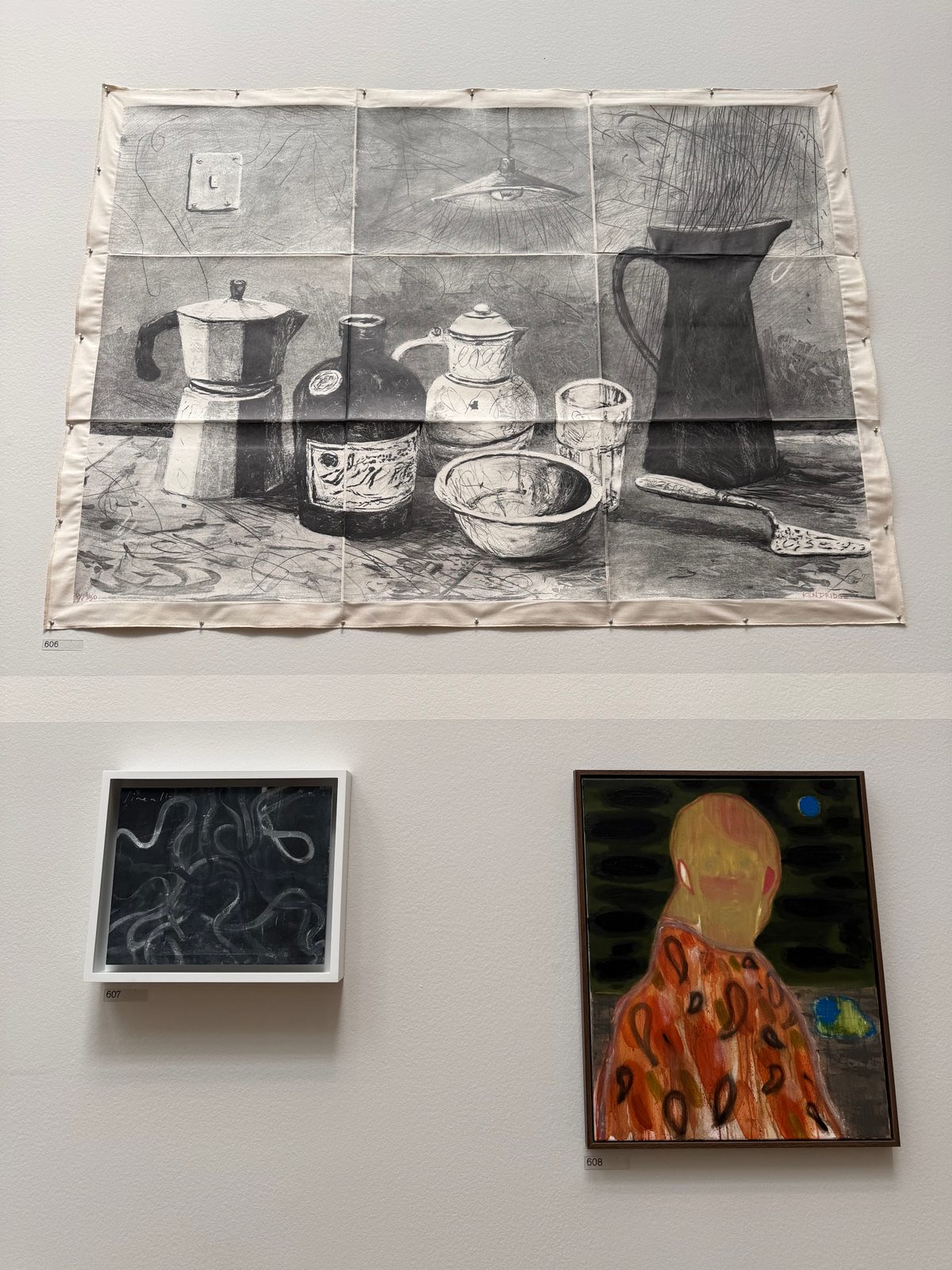
You look first. You find out second.
The trained eye still cheats. I clock a Scully by the stripes from across the room, the way you’d clock an Emin by a line. Knowing too much is its own handicap here. The pleasure belongs to the person who doesn’t yet know, who stands in front of 914 and decides whether it’s any good before the book tells them what to think.
I handed a friend the list and a pencil after breakfast and sent her in. She had never been. By the end of the afternoon she had catalogue numbers written in the margins, half of them by people she had never heard of.
When she looked them up, the prices arrived all at once. A £373,000 Scully and a £350 thread drawing share a room and the same little labels. On the wall they are equal: a number and a frame, with a red dot when they sell. The hierarchy lives in the book.
I had seen that Scully before, or near enough. In May I stood in front of the same series on Lisson’s stand at TEFAF New York: the Wall paintings, oil on copper, priced for the people who fly in for the preview. A month later one of them was catalogue number 914 in Piccadilly.
At TEFAF it was a highlight. At the Academy it was a shining example of a Great British Artist.
Which is why the timing is worth noticing. The Summer Exhibition opened the same week as Art Basel. The Academy opened on 16 June. Basel ran its previews on the 16th and 17th and its public days to the 21st. Nobody planned it. But the two shows are opposite ideas of order.
Basel is gated at both doors: vetted dealers, serious money, immaculate booths. The Summer Exhibition is open at both: anyone can enter, anyone can buy, and the result looks exactly as open submission should look. Crowded, uneven, democratic, maddening, alive.
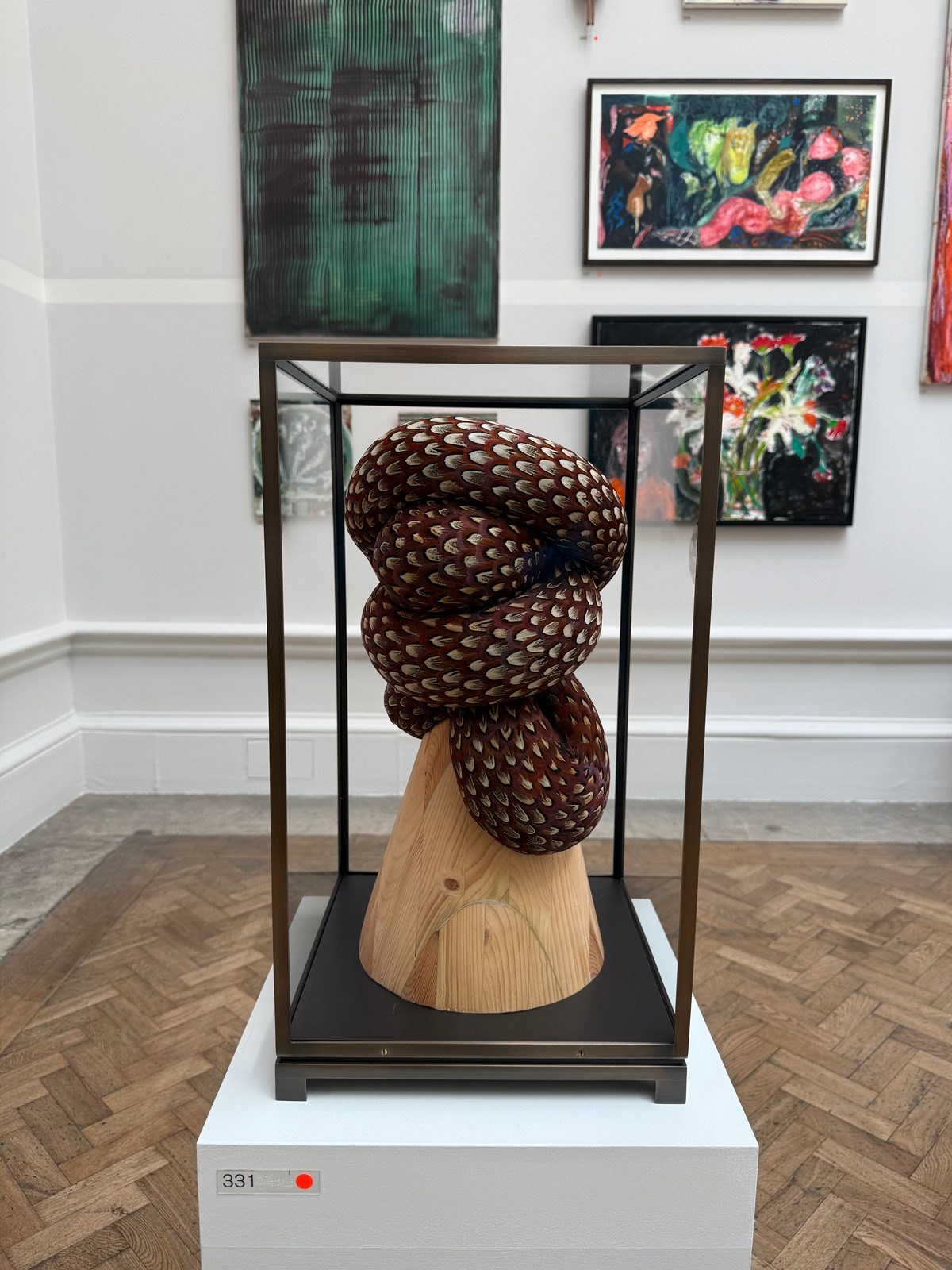
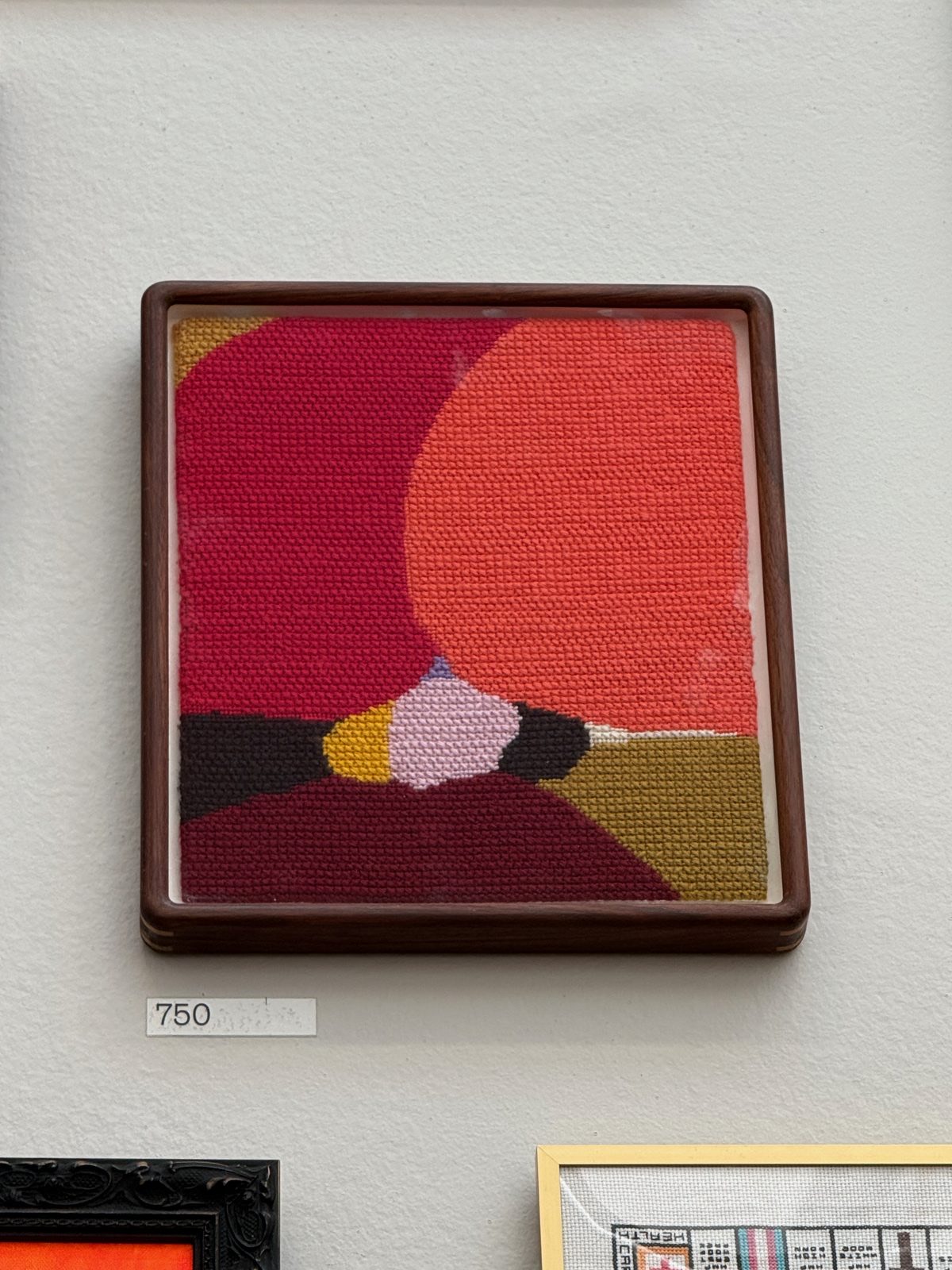
The show is entirely serious about art, and about money. The Scully is £373,000. Kate MccGwire’s feathered sculpture, number 331, sold at £40,800. Helen Beard’s needlepoint is £25,200. What’s been removed is the gate, not the seriousness. You need £23.50 to get in, and under-16s come in free.
A fair shows you what the market has already agreed to sell. The Summer Exhibition shows you the sorting still happening, in public, with the public’s own work in the room. Drawing, painting, photography, sculpture, architecture, film, a print pulled from an AI-generated image. And you can take part.
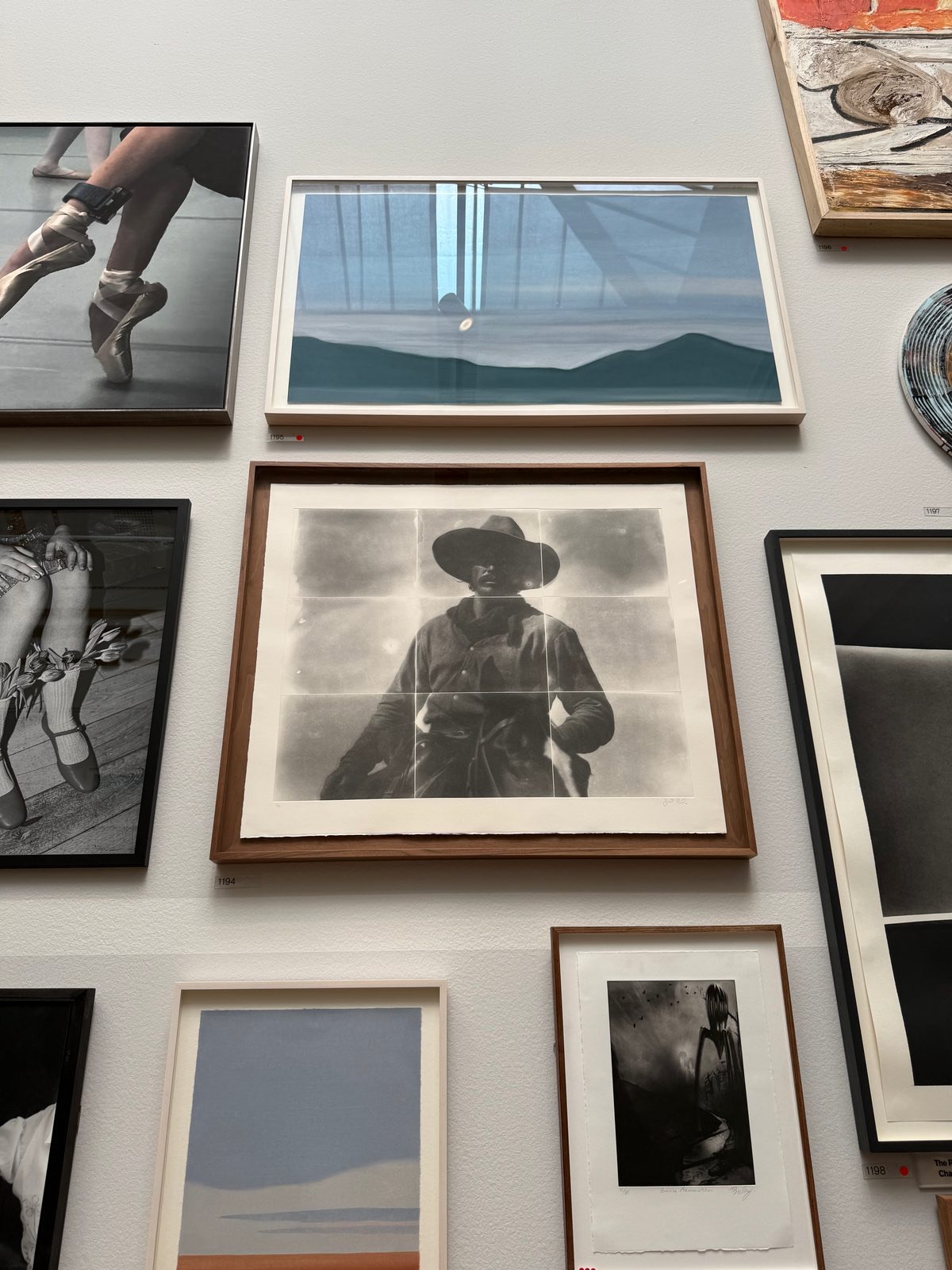
A print by Sam Austen, a graduate of the Academy’s own Schools, was £250 in an edition of 20. You pay a deposit, settle the rest with the artist, and collect the work in August. It is one of the easier places in London to find an emerging artist early, before a gallery has set the price.
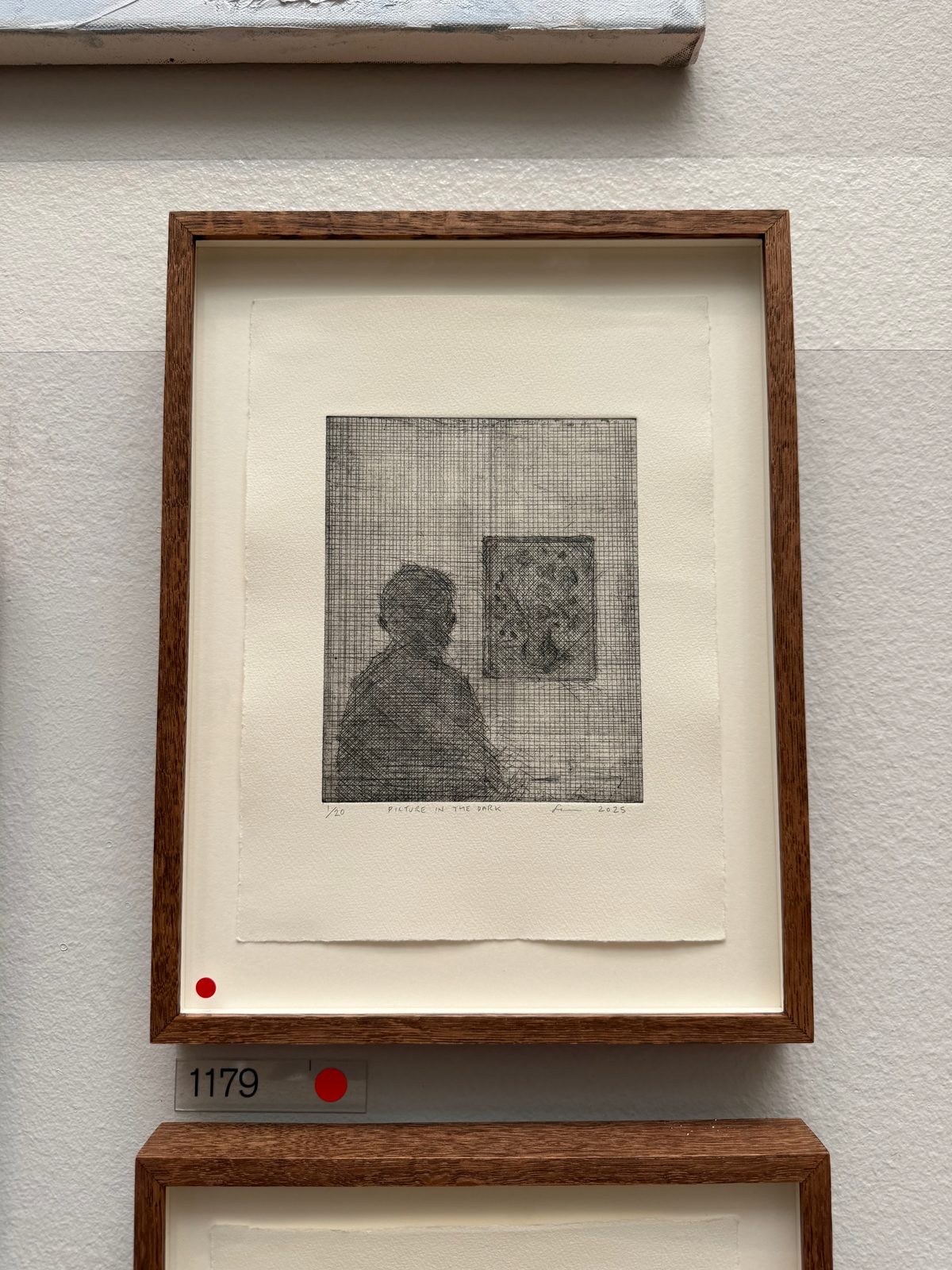
The reviews ask whether you can find the gems in the mishmash. But the mishmash is what you came for.
It runs to 23 August. Take someone who has never been, hand them the list of works and a pencil, and let them decide what they like before anyone tells them.
My friend is taking her children next.
Which feels like a recommendation stronger than any review.