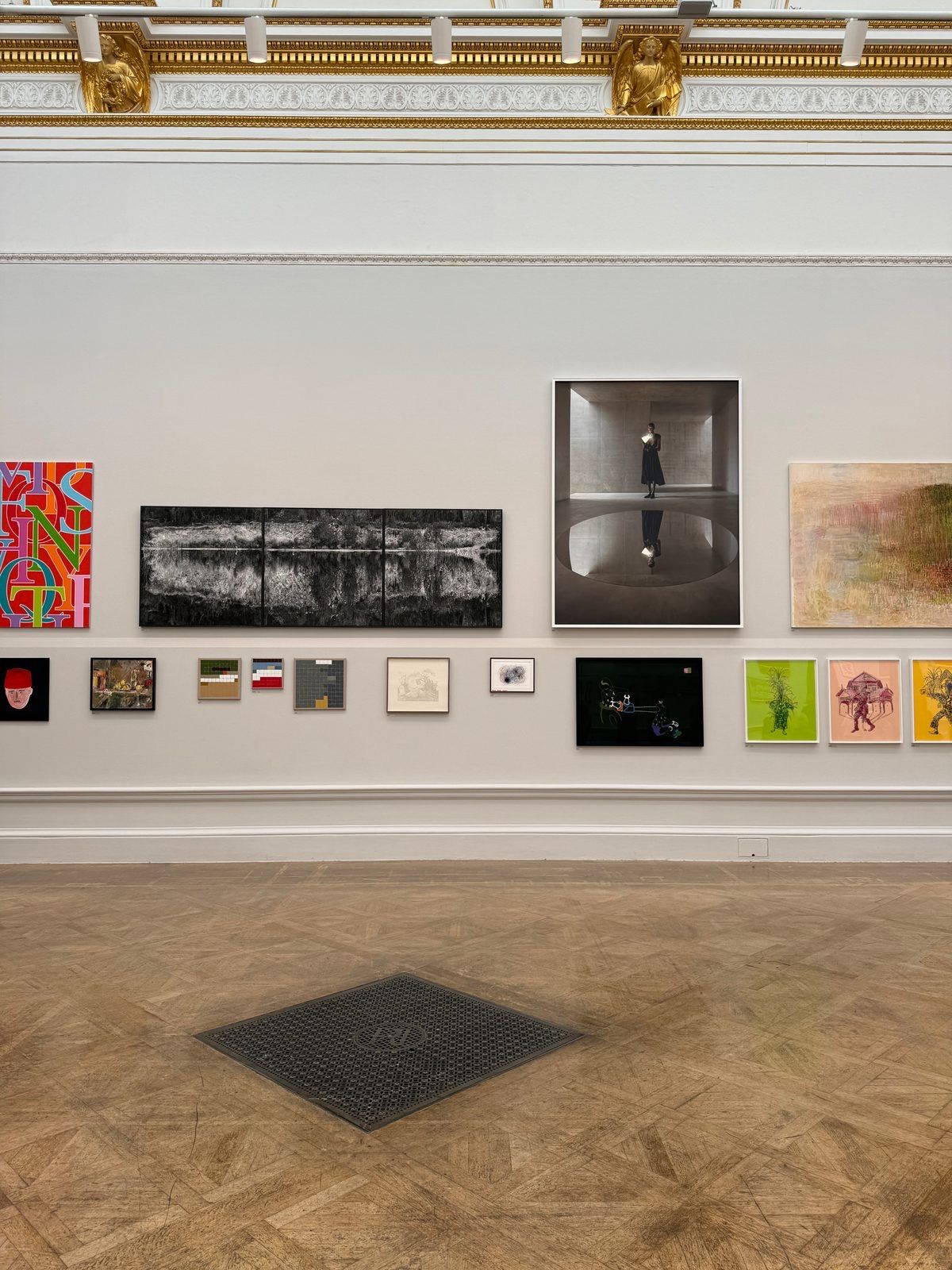
In the British art world, an emerging artist is usually someone in roughly the first decade of professional practice: exhibiting regularly, building a record, and starting to gather recognition from galleries, institutions or collectors. It is a stage, not an age. A painter in their fifties who comes to art late can be emerging, and a graduate who has already had a solo show with a serious gallery may have moved past it.
For a collector, the appeal of buying at this stage is obvious. Work bought early, before a market has formed, can carry real cultural and financial value as the artist develops. The risk is just as obvious: most emerging artists do not go on to sustained careers. What follows is how to read the signals that separate genuine promise from noise, how to judge the work itself, and where to start looking.
What “emerging” means in the British market
Emerging status is about career stage and visibility, not age. The usual markers are:
- A consistent exhibition record over the last few years rather than a single show.
- Representation by a respected gallery that works with early-career artists, or clear interest from one.
- Inclusion in curated institutional shows or art-fair sections.
- Early acquisition by public collections or established private ones.
No single marker means much on its own. It is the combination, building over time, that matters.
How to spot a promising emerging artist
Exhibition history
Strong early-career artists tend to show at reputable non-profit and project spaces before they take on commercial representation. Worth watching for:
- Whitechapel Gallery’s First Thursdays and the gallery circuits around them.
- The Royal Academy Summer Exhibition, which still surfaces unrepresented names.
- Regional institutions such as BALTIC in Gateshead or Modern Art Oxford.
Institutional recognition
Support from institutions gives an artist credibility that collectors read as a signal. It includes group shows at museums, public-collection acquisitions, and the established prizes, above all Bloomberg New Contemporaries and the Jerwood awards.
Market signals
Even before a primary market settles, you can read early movement: works placed with respected collectors, repeat invitations to curated fair sections such as Frieze London’s Focus or London Art Fair’s Art Projects, and collaborations with established artists or design houses.
What the signals look like in practice
It helps to see how these markers play out in real British careers, including artists who have since moved well beyond the emerging stage.
The public commission. Nick Hornby builds sculpture by combining digital modelling with traditional materials such as bronze and stone. His 2023 commission Here and There at One Kensington Gardens, and exhibitions reaching the Museum of Arts and Design in New York, show how a studio practice that scales convincingly into public space reads as a sign of an artist the institutions trust.
Gallery representation that lasts. Jodie Carey works in plaster, cloth and found materials, often with a quiet memorial quality. A long relationship with a serious gallery, in her case Edel Assanti, is one of the steadier signals there is, because a gallery commits its own reputation and programme to an artist over years rather than a single show.
Visibility in the public realm. Sinta Tantra is known for colourful, geometric work made for architecture and public space, from the Folkestone Triennial to a painted bridge produced for the 2012 London Olympics, alongside her gallery painting. Sustained public commissions and institutional awards are a strong indicator that an artist can carry attention and deliver at scale.
How to judge the work itself
You do not need technical training to assess quality. Three things are within any attentive collector’s reach:
- Material confidence. Even unconventional materials should look resolved and structurally sound, not provisional.
- Concept and execution in step. The idea and the way the work is made should feel of a piece, not bolted together.
- Consistency. Across several exhibitions, does the artist hold a recognisable quality and voice, or does the work lurch about?
Where to look first
The best early access is rarely the commercial gallery. Start with:
- Degree shows at the Royal College of Art, the Slade and Goldsmiths, and the open studios around them.
- Bloomberg New Contemporaries, which has introduced generations of British artists.
- Non-profit and artist-led project spaces, where new names appear before the market reaches them.
- The curated fair sections built for early-career work, and the prize shortlists worth following.
- Online viewing rooms and artist newsletters, which increasingly drive early discovery, used as a starting point rather than a substitute for seeing work in person.
Frequently asked questions
What is an emerging artist? An artist in roughly the first decade of professional practice, exhibiting regularly and starting to gain recognition from galleries, institutions or collectors. It describes a career stage, not an age.
What does “emerging” mean in the art market? That an artist has a developing exhibition record and early institutional or market interest, but not yet an established secondary market or settled prices.
How do you spot a promising emerging artist? Look for a combination of signals rather than one: a consistent exhibition history, institutional recognition such as a New Contemporaries or Jerwood selection, and early interest from a respected gallery or collectors.
Where can you find up-and-coming artists in the UK? Degree shows at the RCA, Slade and Goldsmiths, open studios, non-profit project spaces, and the New Contemporaries exhibition are the usual starting points, along with the curated sections of fairs like Frieze.
Should you only buy from artists with gallery representation? Not necessarily, but look for a consistent body of work and some public exhibition history before committing.
How do you assess long-term potential? Look for critical attention, institutional support and steady development in the work over time, rather than a single strong show.
Glossary
Primary market. The first sale of a work, usually from the artist or their representing gallery.
Institutional recognition. Endorsement by museums, non-profits or publicly funded arts bodies.
Degree show. The exhibition of graduating students’ work, often open to the public.
For more on the British market, see Ten British Sculptors Shaping the Contemporary Market and the collector’s guide to global art and design fairs.