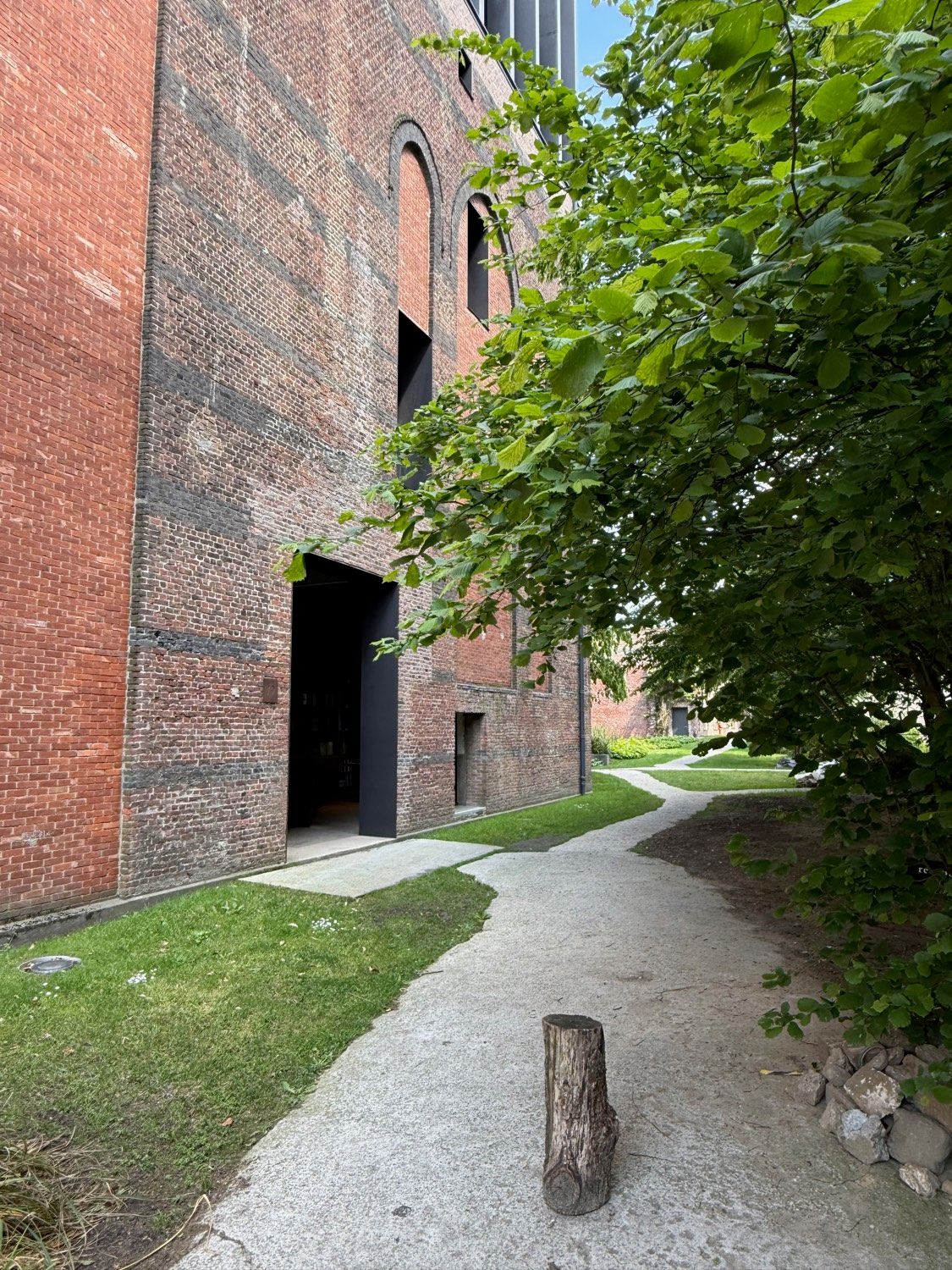
It’s a Saturday morning in May. A gravel path runs along the old brick wall, past a single tree and a sawn-off log set in the grass as a bollard. The entrance is a black rectangle cut straight into the brick, unmarked.
Inside, the brick is from 1857 and left as it was found. The tall arched windows are bricked up flat. Where the building needed a floor or a stair, black steel and grey concrete have been set straight into it, none of it dressed to match. This is an old malting distillery on the Albert Canal, a few miles outside Antwerp, restored between 1999 and 2017. The old fabric and the new work are left in open contrast.
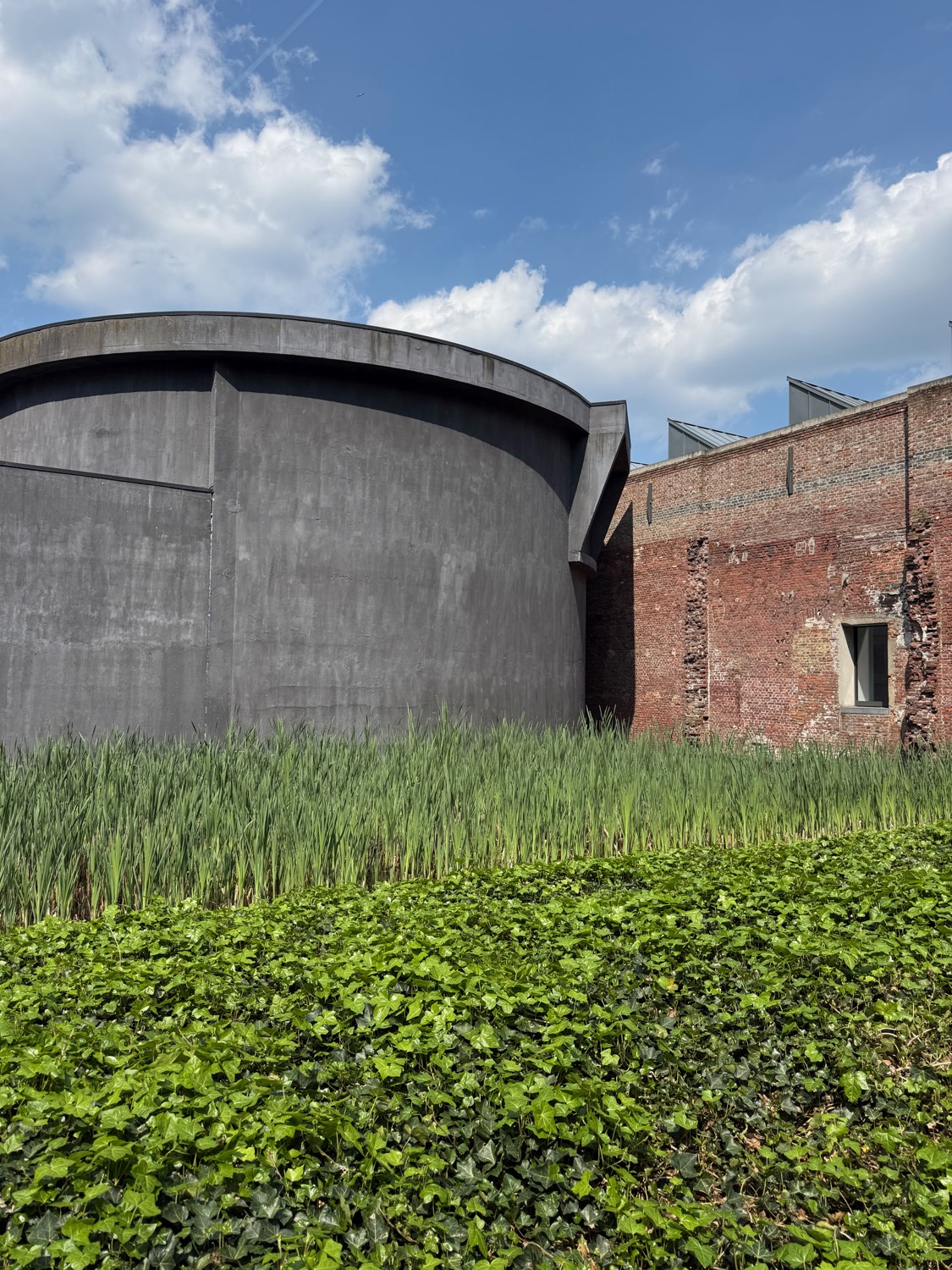
The architecture does much of the curating here. It directs where you look and where you walk, and it does so openly.
A word on whose gallery this is, because the shorthand misleads. The contemporary gallery here opened in 2011, run by Boris Vervoordt and named after his father Axel’s antiques and interiors business. Axel is the collector and dealer whose method the whole site runs on. Boris runs the gallery. When people say Axel Vervoordt’s gallery, that’s what they mean.
What is Kanaal?
Kanaal is a former malting distillery on the Albert Canal at Wijnegem, a few miles east of Antwerp, restored by Axel Vervoordt’s company between 1999 and 2017 as a place where art, architecture and daily life share a site. It holds the contemporary gallery, the family company, the permanent installations of the Axel & May Vervoordt Foundation, and around a hundred flats. People live here, among the art.
The building moves you
The main staircase is narrow, grey concrete on both sides, climbing towards a panel of old brick lit from a light set in the ceiling above. The light sits at the top, so that is where you go.
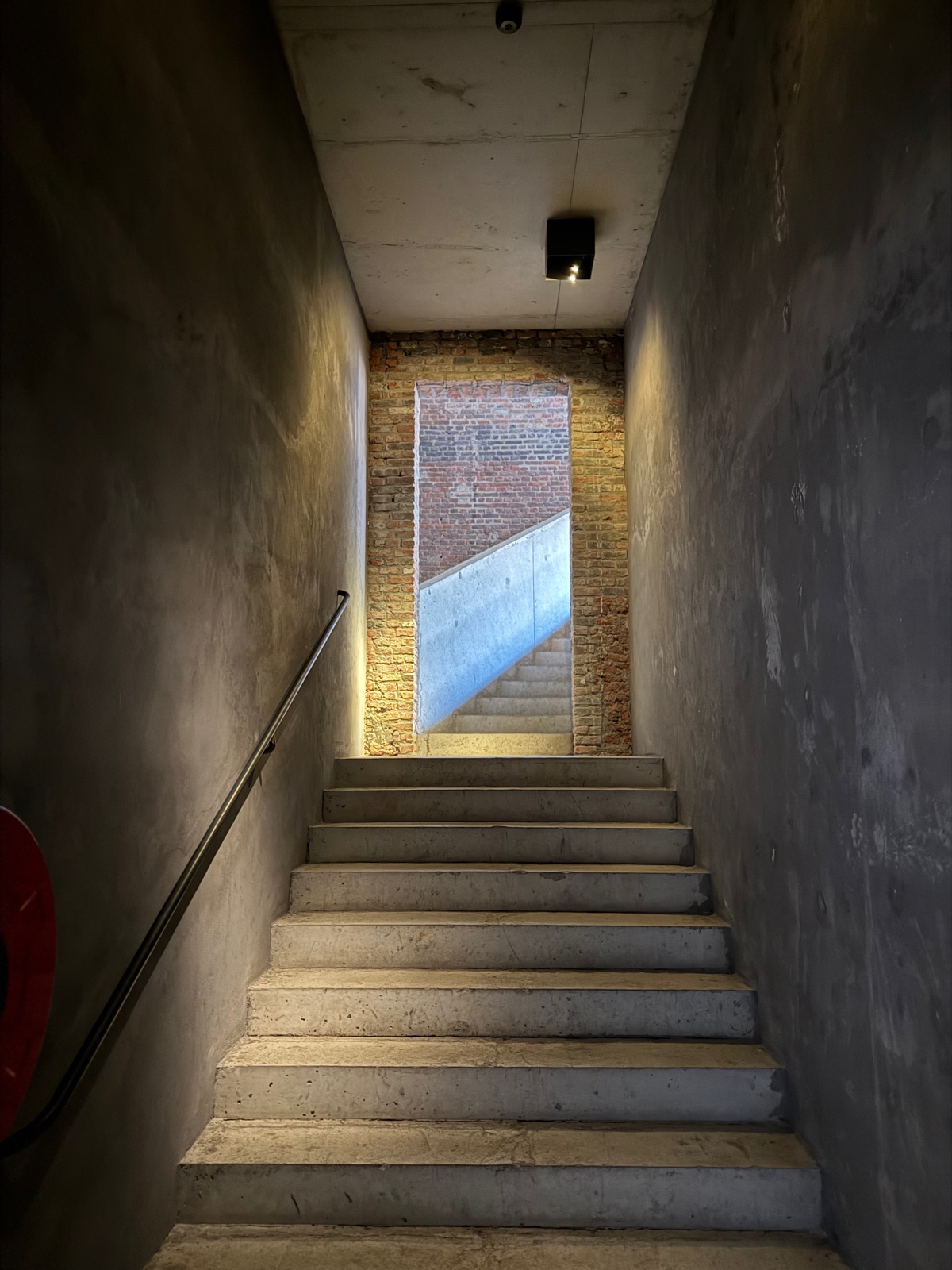
Stay an hour and you watch the other visitors as much as the work. They slow at the same turns, drift to the same lit walls, stop in the same doorways. The building moves everyone the same way.
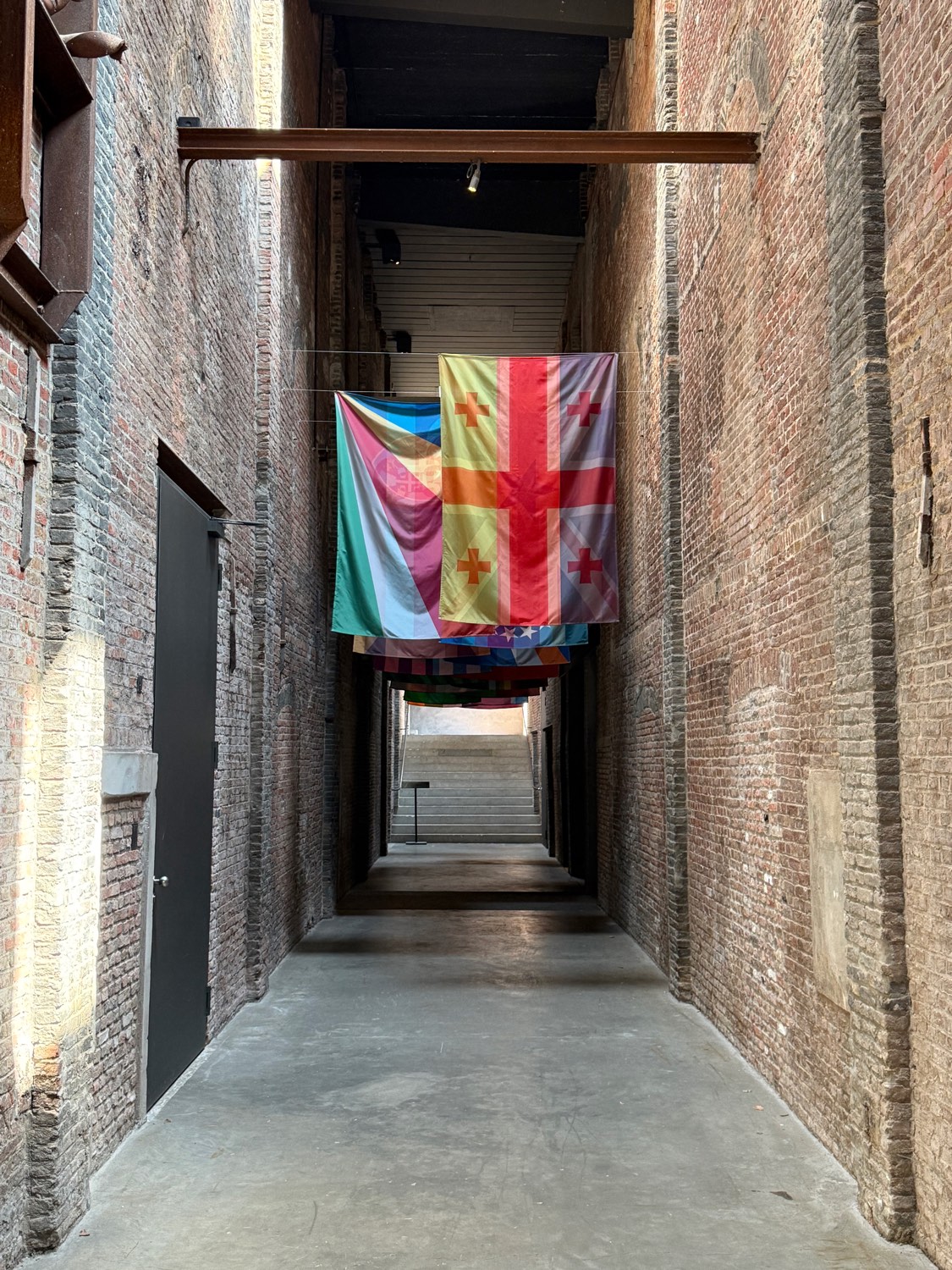
In a long brick corridor, a row of Kimsooja’s flags, To Breathe – The Flags, hangs in a line of 15, receding into the light at the far end.
What holds up
The work that holds its place here is whatever can stand up to a building this strong. Plenty can’t.
Sopheap Pich’s first solo show in Belgium is on while I’m there. He builds rather than carves, in bamboo and rattan and in hand-forged copper and recycled aluminium, working from the grid structures of Cambodian craft. The pieces are built to hold a room.
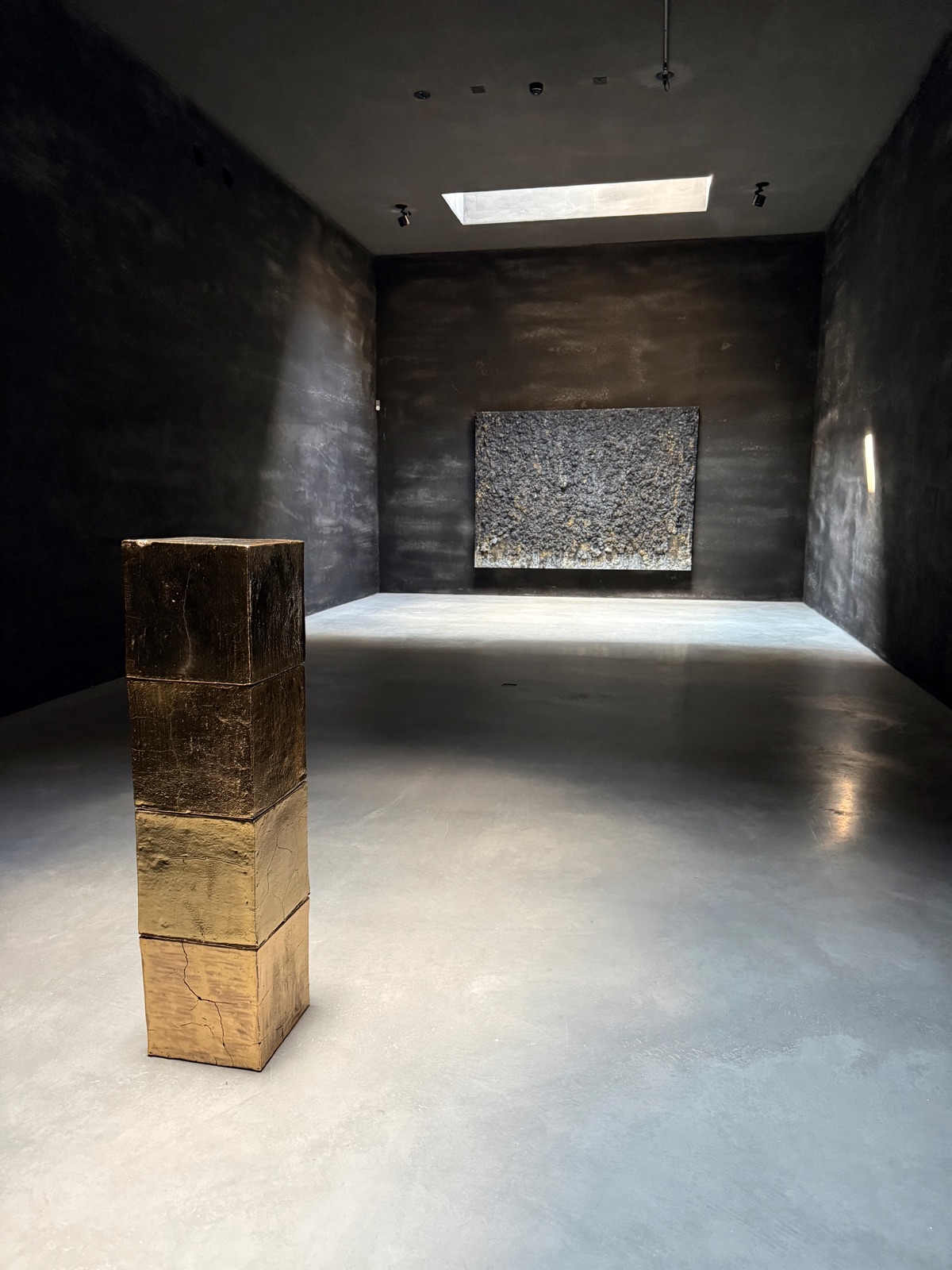
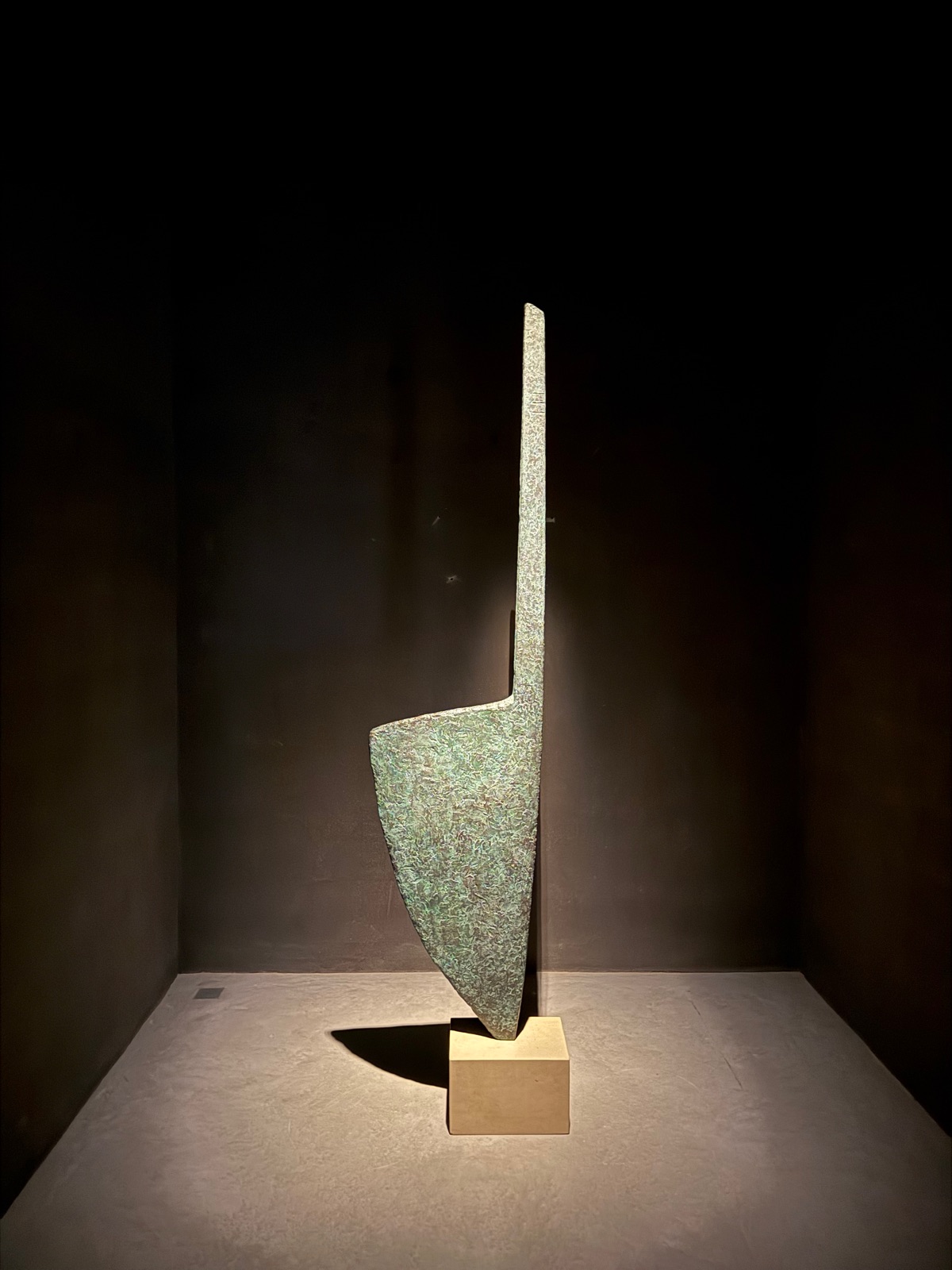
In the group hang nearby, Bosco Sodi’s gilded terracotta column stands beside a thick cracked wall piece the grey of lunar ground, and a red enamelled rock sits on the floor. William Turnbull’s sculptures are here too: totems, a blade, a sphere on a column, forms that read as both ancient and modern.
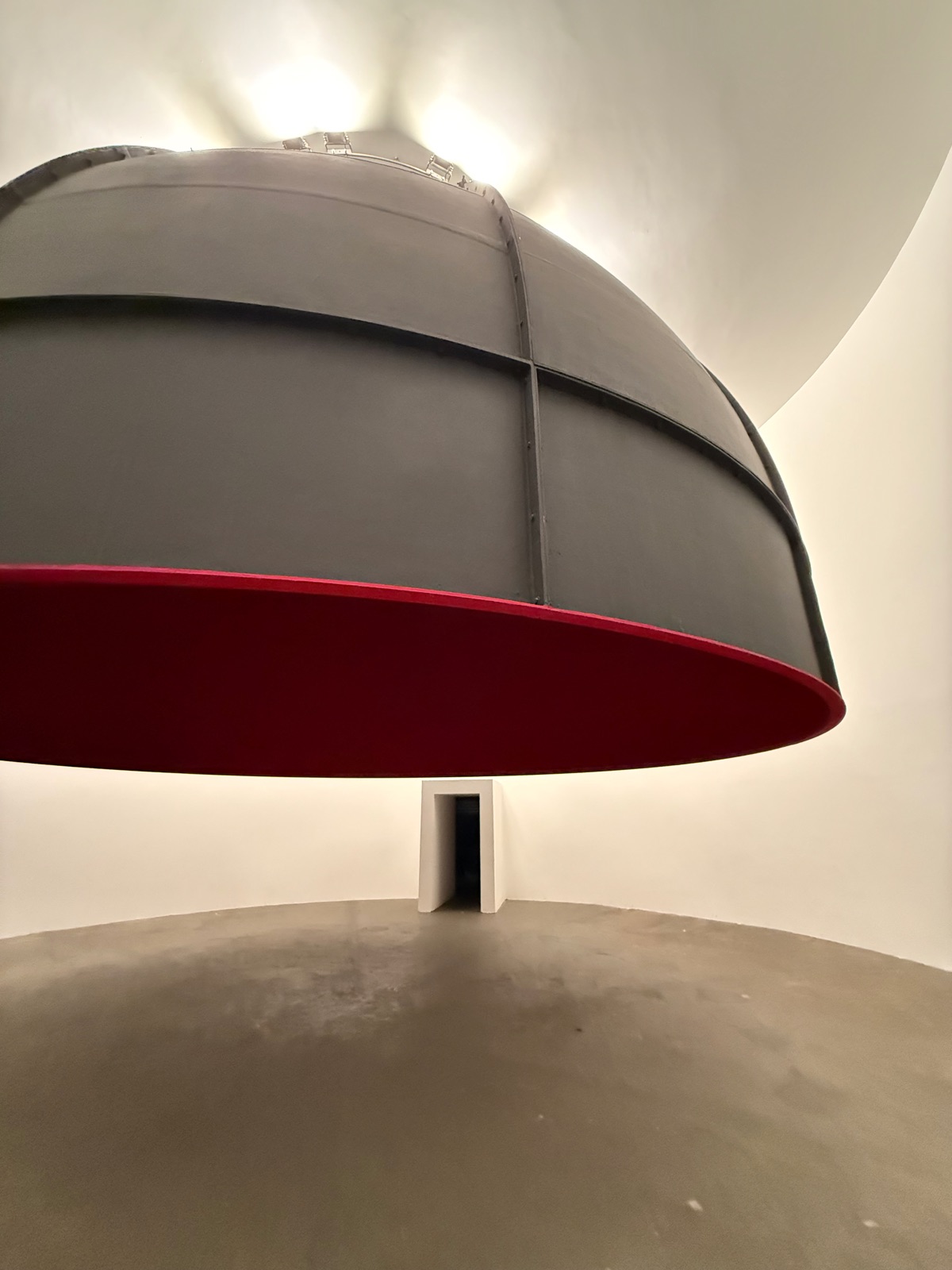
Two of the strongest works are permanent. Anish Kapoor’s At the Edge of the World (1998) and James Turrell’s Red Shift (1995) belong to the Axel & May Vervoordt Foundation and stay in place while the temporary shows change around them. The Kapoor hangs inside the round building by the water: a suspended dome about eight metres across, grey outside, deep red within, the red almost going to black. The Turrell occupies a former chapel, a field of red light that gives no sense of how far away it is.
The whole site runs on a taste for age and for what time does to a surface: patina, wear, the cracked, the bricked-up. It is also a working place, with offices, workshops and around a hundred flats, so it never reads as a museum. You are a guest in something still in use.
The figure
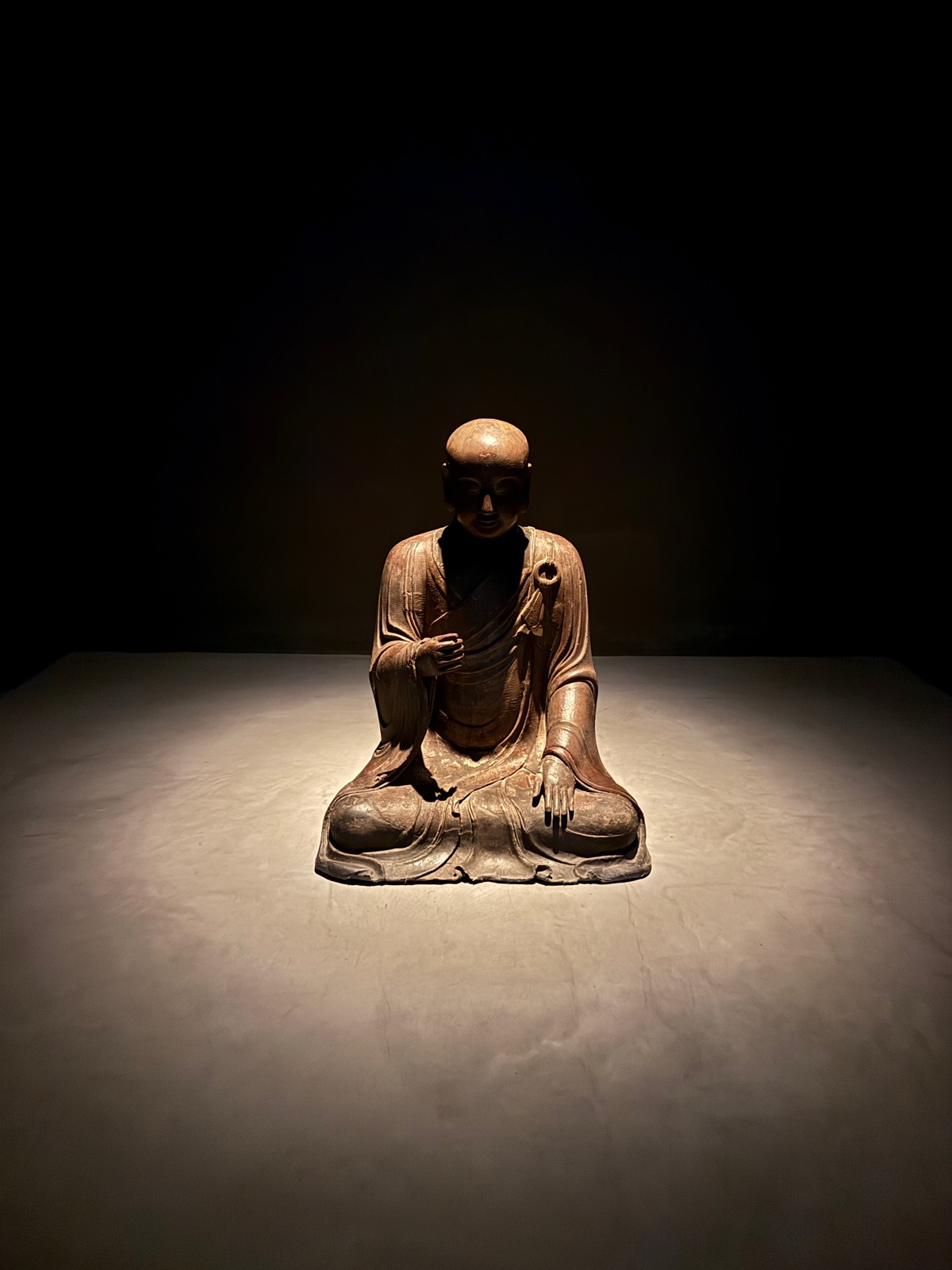
This is where Vervoordt’s method shows plainly. Among the contemporary pieces sits a small Asian devotional figure, old, head bowed. Buddhist by the look of it, a monk or a luohan, though there’s no label, so I can’t give you the maker or the date. It carries no special billing. An object carved long ago, set beside work made last year. That pairing, old against new, is Vervoordt’s whole approach, and it runs through the building as much as the art.
Worth the trip. Easily. Give it longer than you think you need; the work rewards the time and so does the building. Go on a quiet day if you can. It reads better without a crowd.
Visiting Kanaal
The gallery is open on Fridays from 2 to 5 and Saturdays from 11 to 6, and otherwise by appointment; the showrooms are by appointment only. The address is Kanaal, Stokerijstraat 19, 2110 Wijnegem, a few miles east of Antwerp. The Foundation’s permanent works, the Kapoor and the Turrell among them, sit within the complex and are part of what you see. What’s on, current hours and appointments are at axelvervoordtgallery.com. SILO, the restaurant on site, does lunch if you time it.
One distinction worth making, because people run the two together: Kanaal is not the castle. The castle of ‘s-Gravenwezel, nearby, has been the Vervoordt family’s home since 1986, and it is private. Kanaal is the public face: the gallery, the Foundation’s installations, the company, and the people who live there.
Frequently asked questions
What is Kanaal? A former malting distillery on the Albert Canal at Wijnegem, outside Antwerp, restored between 1999 and 2017. It holds the Axel Vervoordt Gallery, the Axel & May Vervoordt Foundation’s permanent installations, the family company and around a hundred flats.
Can you visit Axel Vervoordt’s gallery at Kanaal? Yes. The gallery is open Fridays from 2 to 5 and Saturdays from 11 to 6, with visits outside those hours by appointment. The showrooms are by appointment only.
Where is Kanaal? Stokerijstraat 19, 2110 Wijnegem, on the Albert Canal a few miles east of Antwerp.
Is Kanaal the same as Axel Vervoordt’s castle? No. The castle of ‘s-Gravenwezel has been the family’s private home since 1986 and is not open to visitors. Kanaal, at Wijnegem, is the public site.
What is the Axel & May Vervoordt Foundation? The foundation Axel and May Vervoordt set up in 2008 as custodian of their collection. Its permanent installations at Kanaal include Anish Kapoor’s At the Edge of the World and James Turrell’s Red Shift, with works by Marina Abramović and Tatsuo Miyajima among others.
Who runs the gallery? Boris Vervoordt, who opened it in 2011. Axel Vervoordt is the collector and dealer whose method shapes the whole site.